

One Route in Mind
A narrow weather window, a line years in the making, and one long day on the Beckey–Chouinard.
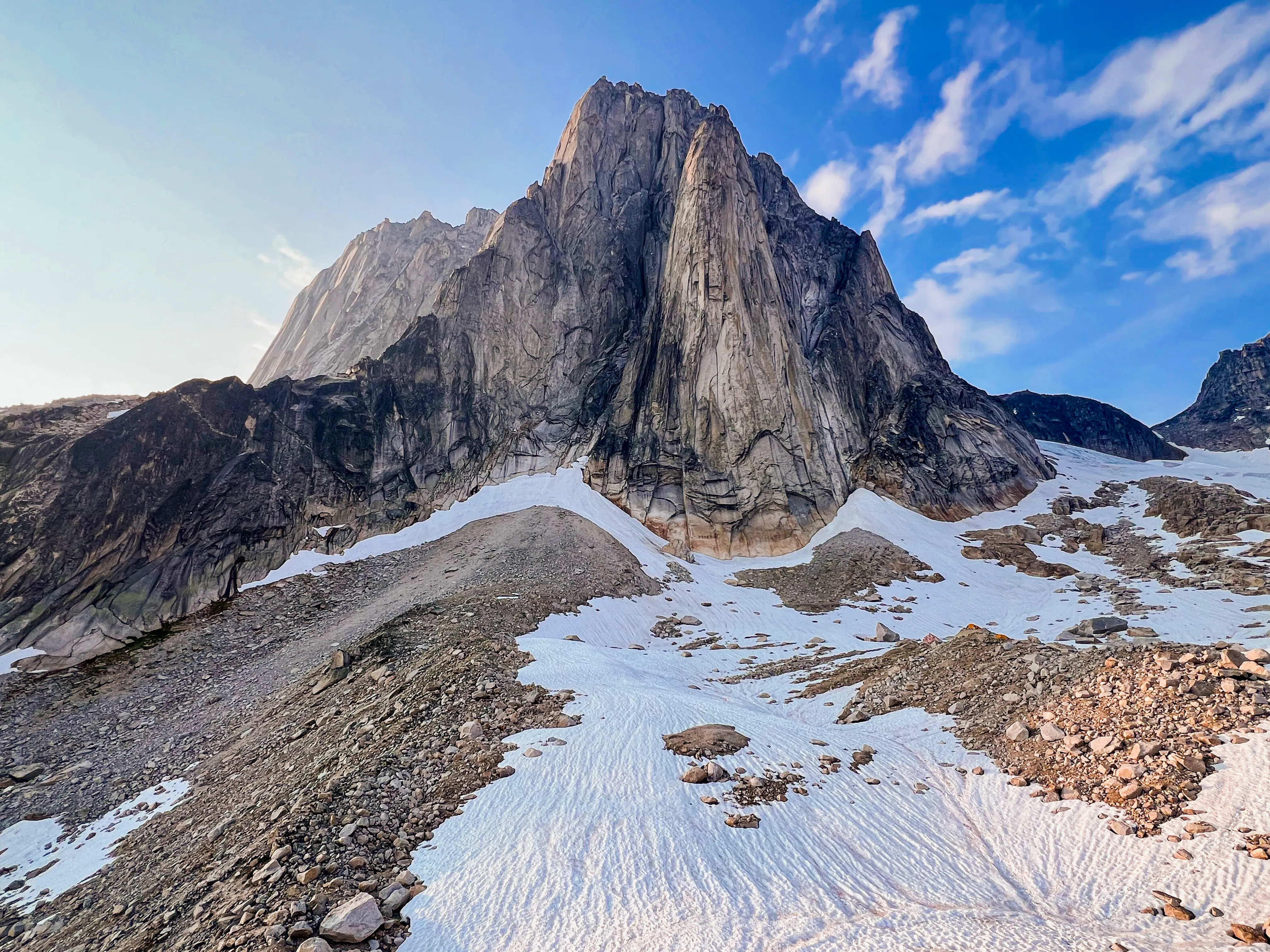
Some routes begin long before the approach.
I learned to climb on limestone in the Rockies. Cracks were features to work around, not systems to follow, and the particular craft of jamming a hand or foot into granite was mostly foreign to me. When I moved to Squamish, I told myself it would be for a summer. The plan was deliberate: learn to jam, become comfortable on granite, then take those skills back to the Bugaboos for the Beckey–Chouinard.
Chris and I had been talking about the route for years. By July 2024, the goal had become familiar enough that it did not need much ceremony between us. We had both spent plenty of time in the Bugaboos and climbed most of the routes around Applebee that interested us in the 5.10 range and below. This trip had only one real purpose.
We went in from July 28 to August 3 with a mixed forecast and the usual Bugaboos uncertainty. Rain was scattered through three of the days, but there were gaps between the systems. If one of those gaps held, it might be enough.
Going over the col
A group from Squamish had gone in the week before us and carried a 70-litre haul bag to East Creek. Food, camping gear and most of the heavy things were already waiting on the far side. It was an enormous favour. On Sunday we could hike with lighter packs and watch the spires reveal themselves one at a time.
The Hound’s Tooth is always the first landmark that makes me stop looking at my feet. It rises cleanly above the approach and changes the scale of everything around it. Farther on, Applebee appeared, then the Bugaboo–Snowpatch Col, the Upper Vowell Glacier and the drop toward East Creek. The whole basin opened as we crossed.
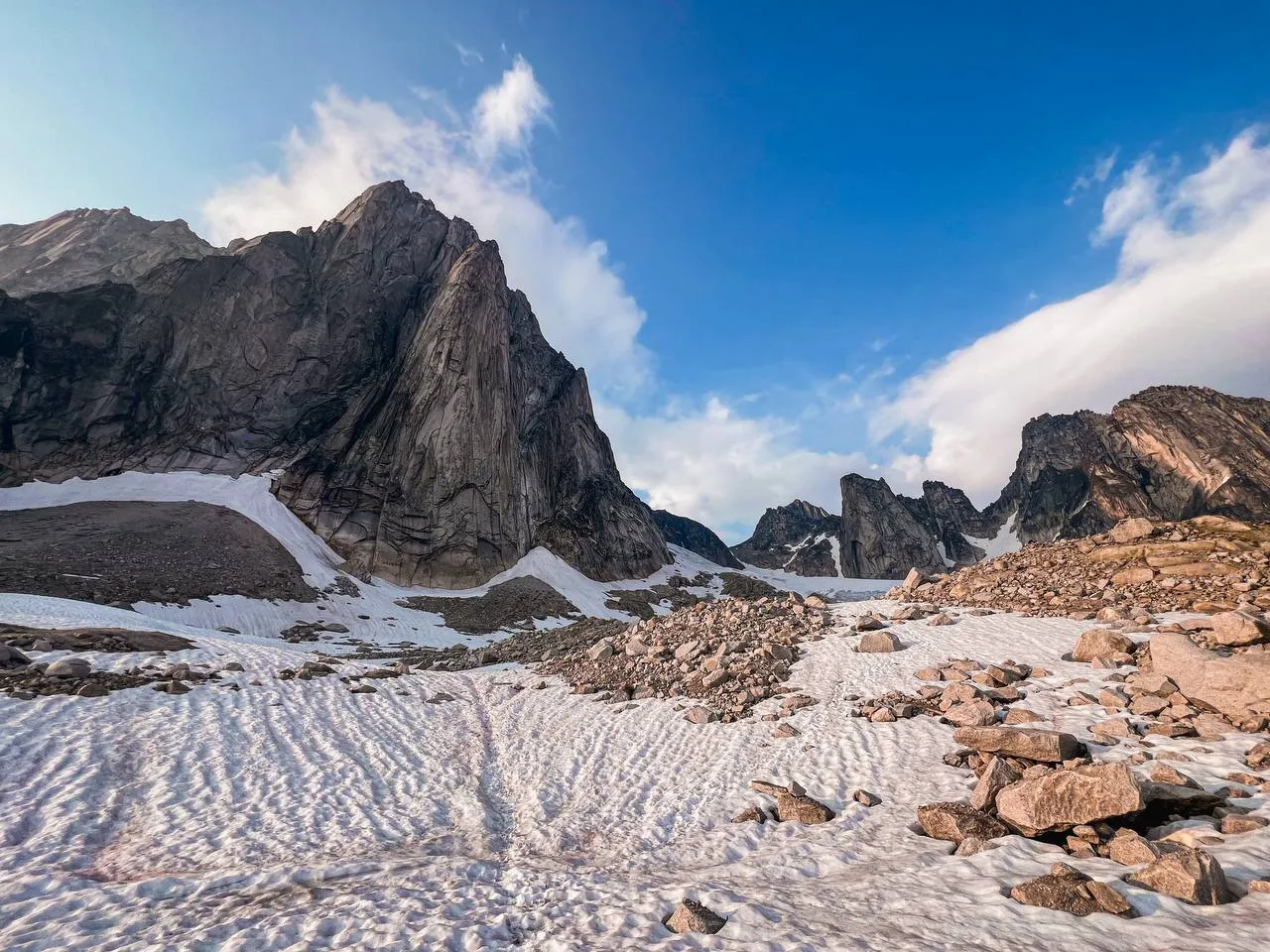
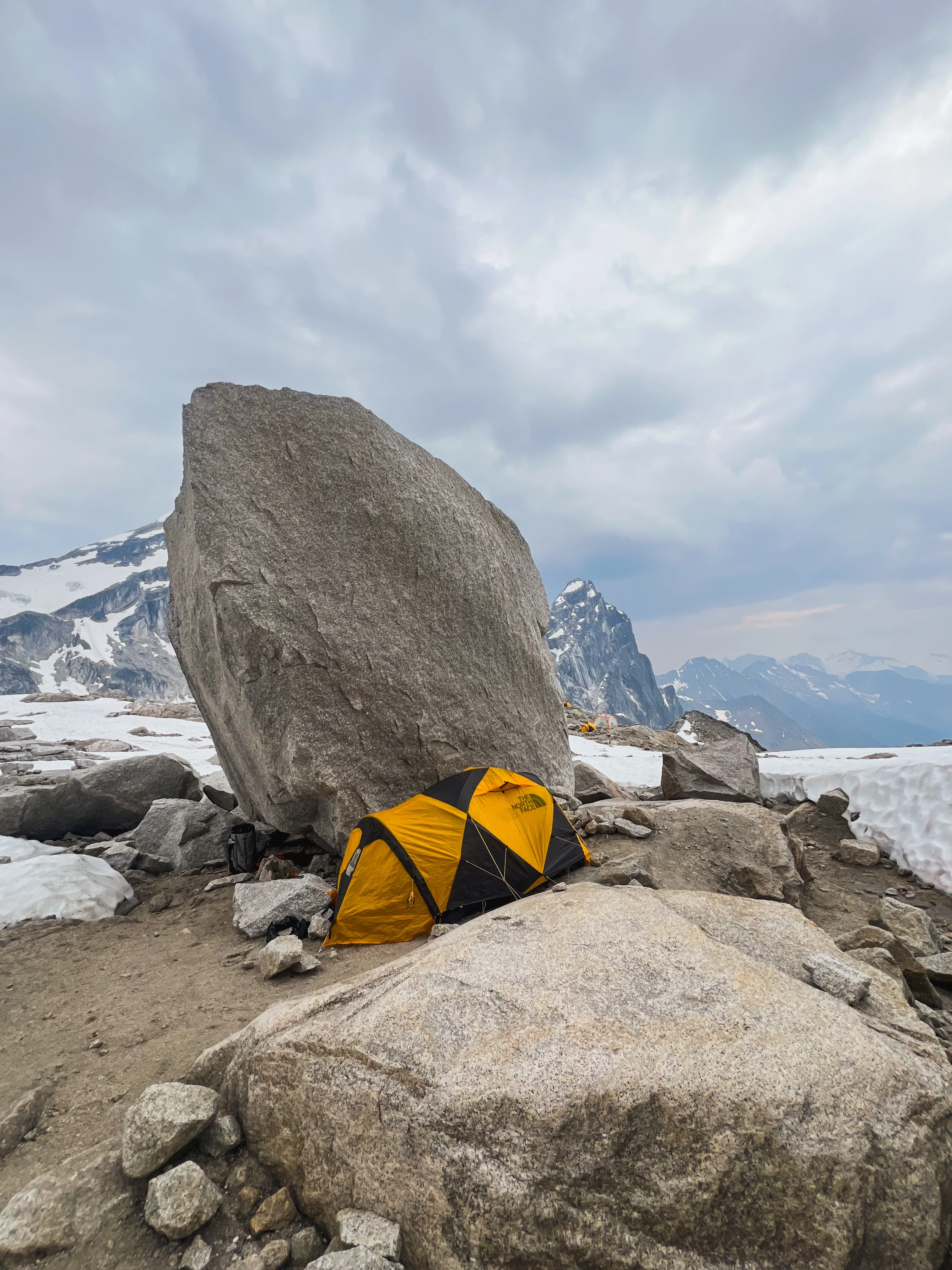
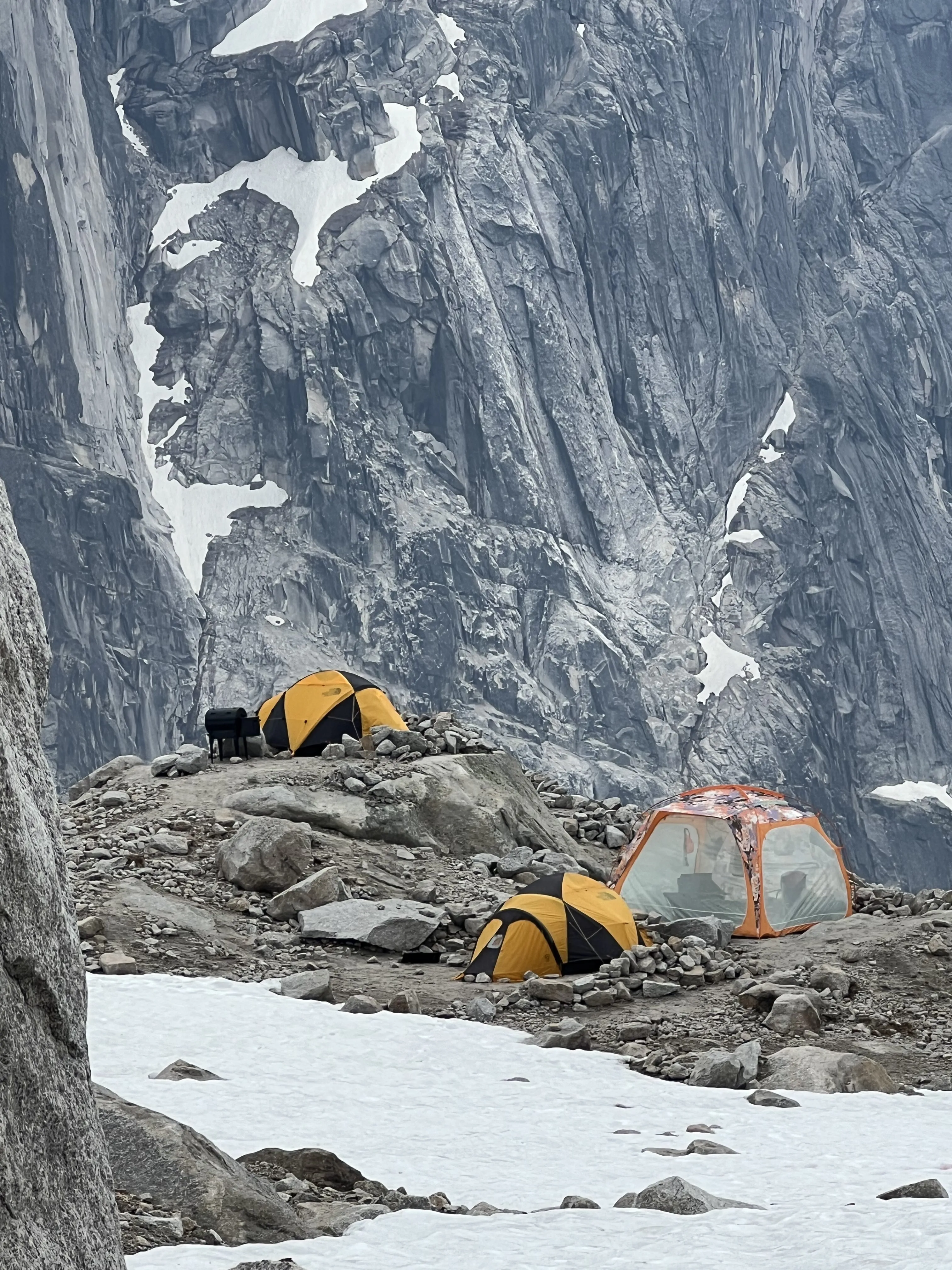
At East Creek, a team of North Face athletes had established a version of camp that included a Traeger grill and Starlink. Fortunately, the site under the Great Boulder was still open. We pitched our tent against the stone, grateful to have a wall at our backs when the weather arrived.
Monday still looked usable, but the forecast made committing to South Howser feel unnecessary. Instead, we scrambled the West Ridge of Pigeon Spire without a rope. The climbing was easy and familiar, a good way to move after the approach without spending the weather window we were waiting for.
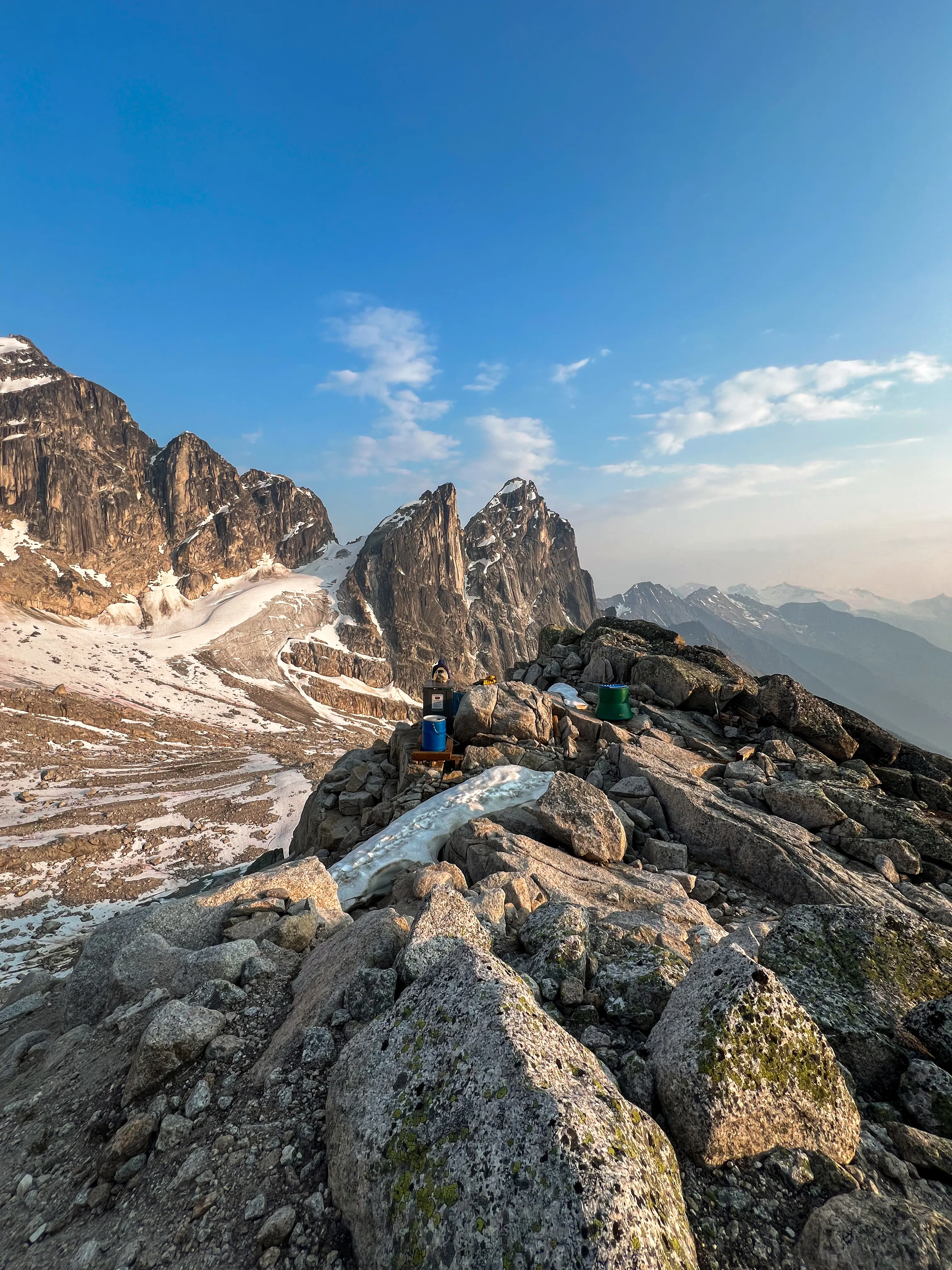
Then the rain came.
For roughly the next 36 hours we were mostly bedlocked in the tent. We read, slept, checked the fabric above us, and went outside when food made going outside unavoidable. I think we finished two books each. It could have been a tedious stretch, but Chris was an easy tent partner and the time passed faster than it had any right to.
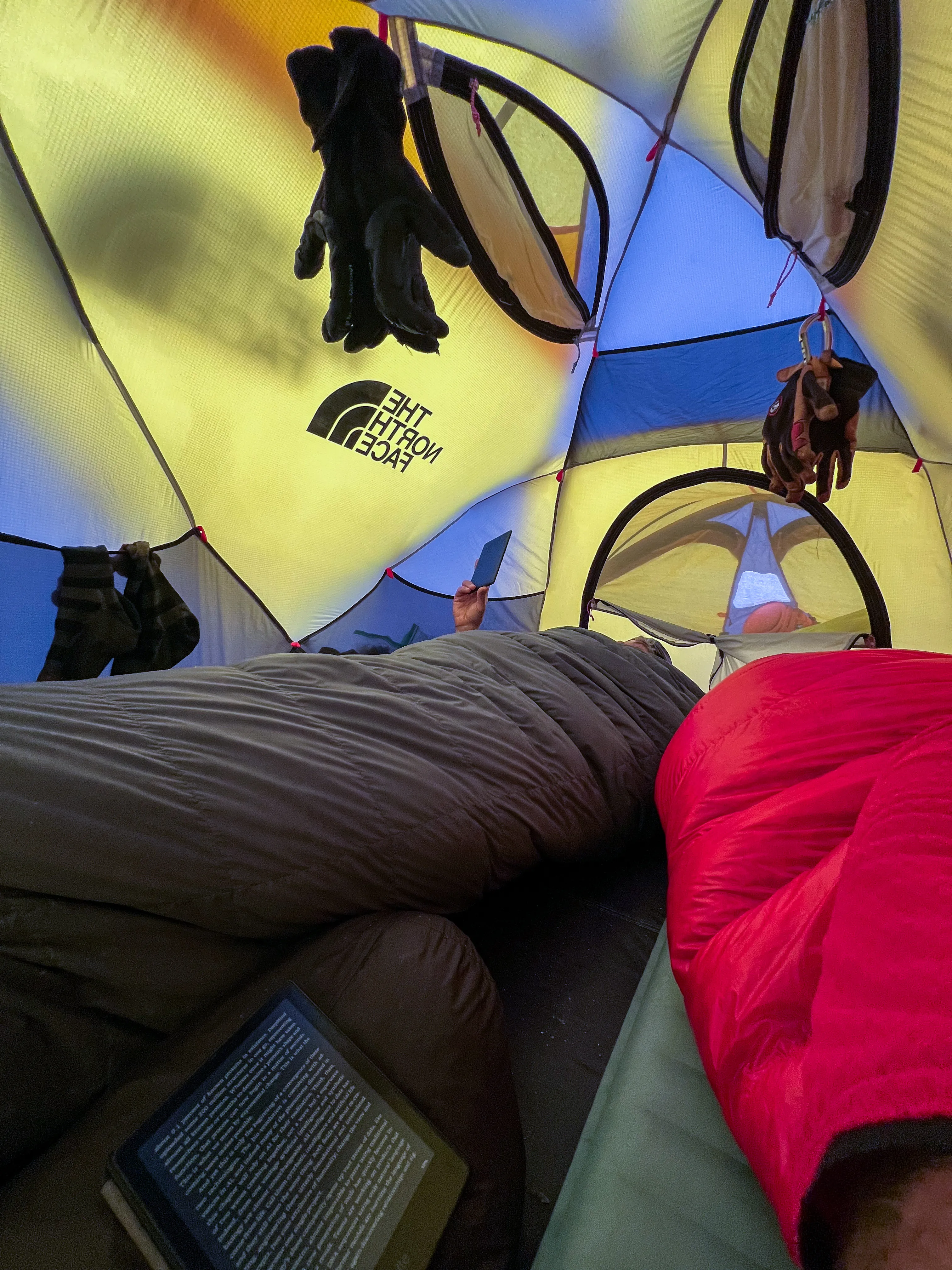
Weather updates arrived in fragments over the InReach from friends back in civilization. Thursday, August 1, kept looking like the day. The forecast was not perfect, but it was the cleanest opening we were going to get.
The headlamps
The alarm went at 3 a.m. We started breakfast, packed the last pieces of gear and watched the dark above camp.
At about 3:30, an army of headlamps appeared at the col between Pigeon and South Howser. They were moving down from the Vowell Glacier, a bright line of climbers who had started at Applebee and were plainly headed the same way we were.
Chris and I did not say anything. We just began eating faster.
We crossed the talus toward the ridge and scrambled to the proper start of the Beckey–Chouinard. One party was already ahead. Within minutes, more teams arrived and a queue began forming behind us. The weather had broken, and the route had been sitting in everyone’s mind. We started by headlamp. The first pitches were mostly low fifth-class climbing, never harder than about 5.8, but I could feel the anxiety underneath the movement. This was no longer an idea or a plan discussed at camp. We were on the route, with a long face above us and no easy way to make the day smaller again.
The first real crux, a 5.10 pitch low on the route, was mine. I had not led a 5.10 alpine pitch in a while and had given it more thought than it deserved. When the time came, I moved through it quickly. At the belay, the relief was immediate. The hardest number on the topo was behind us; what remained was the far more important problem of sustained climbing and time.
The long middle
Above, the route settled into its rhythm: cracks, corners, the Great Dihedral, rack exchanges and the quiet arithmetic of another pitch completed. The climbing stayed remarkably consistent—mostly 5.8 to 5.10—and the teams below never quite reached us. By the time we stepped onto the bivy ledge beneath the Great White Headwall, we were still moving well.
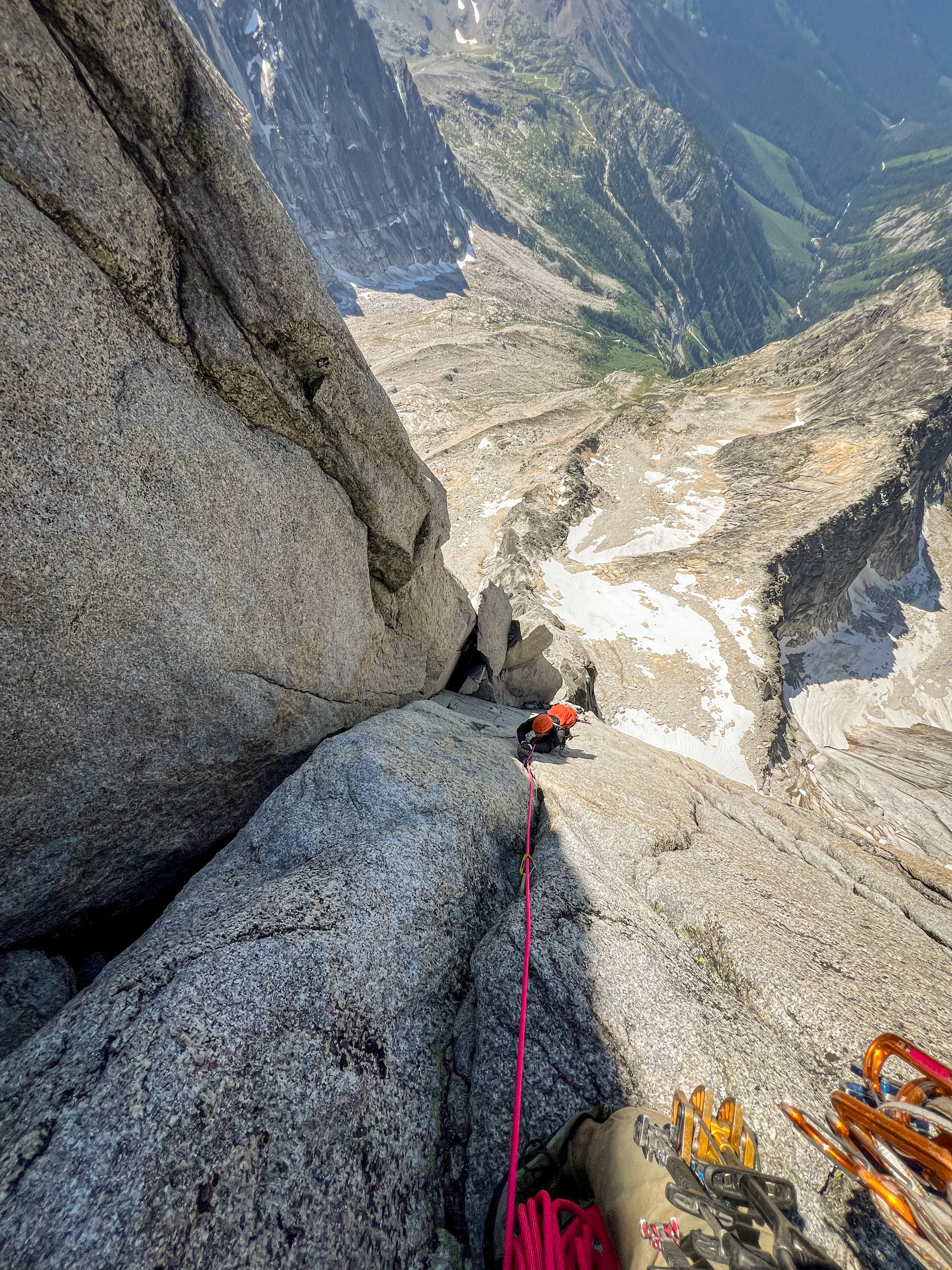
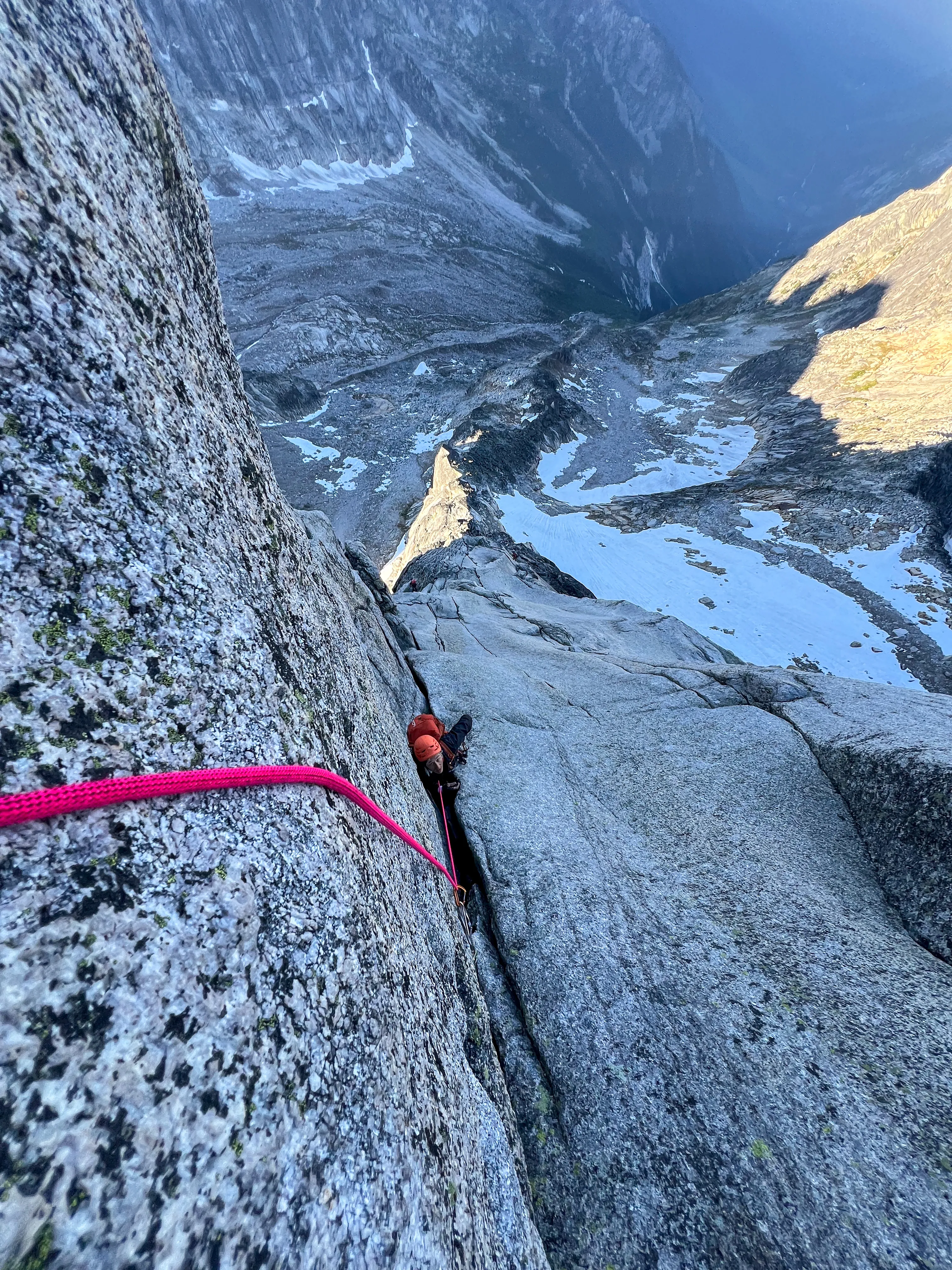
For parties climbing the route over two days, the ledge can be the end of the first. For us it was a pause before the headwall. Beyond it were the steep upper pitches, then easier ground to the summit and a long series of rappels down the other side.
The wide pitch off the bivy ledge was mine. A broad layback led to the top of a pedestal, where the second half opened into sparse, awkward climbing. The rock was wet. What should have been manageable became insecure and slimy, with little gear where I wanted it. It was one of the more frightening pitches I have led.
I reached the belay and needed a minute.
When Chris arrived, two options sat above us. To the right was the classic 5.9 wide corner and chimney, still dark with water. To the left, on the Great White Headwall proper, a line of 5.10 finger cracks offered harder but more secure climbing.
Chris took the fingers.
He moved up them cleanly, trading the wet uncertainty of the corner for the precision of a crack he could trust. From my belay, the route seemed to open again.
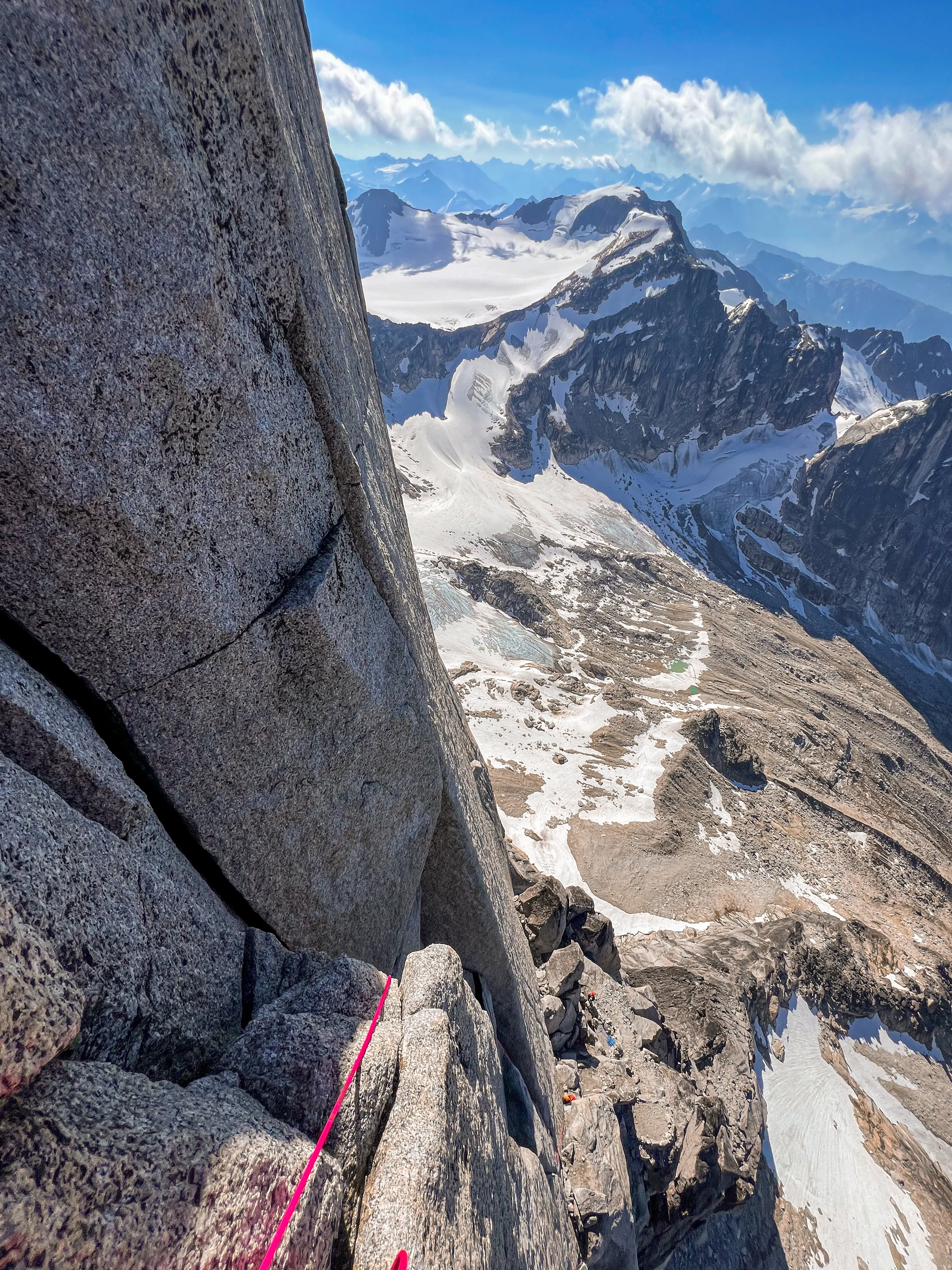
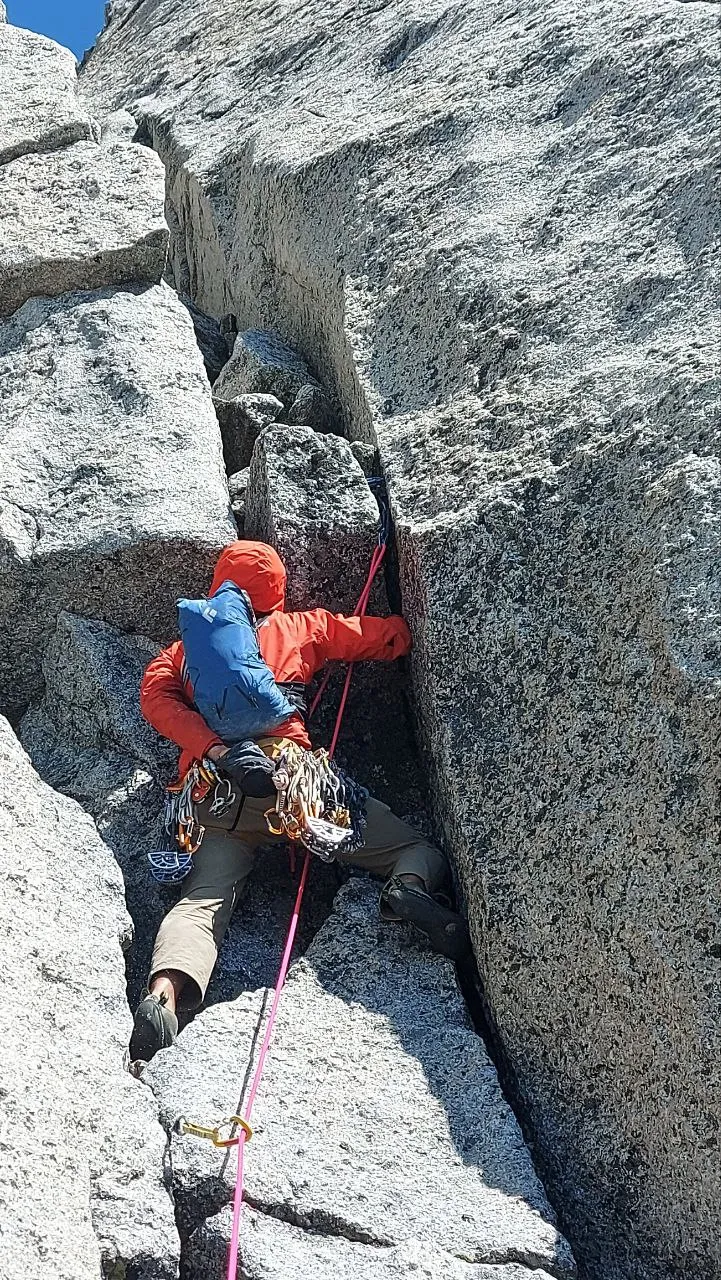
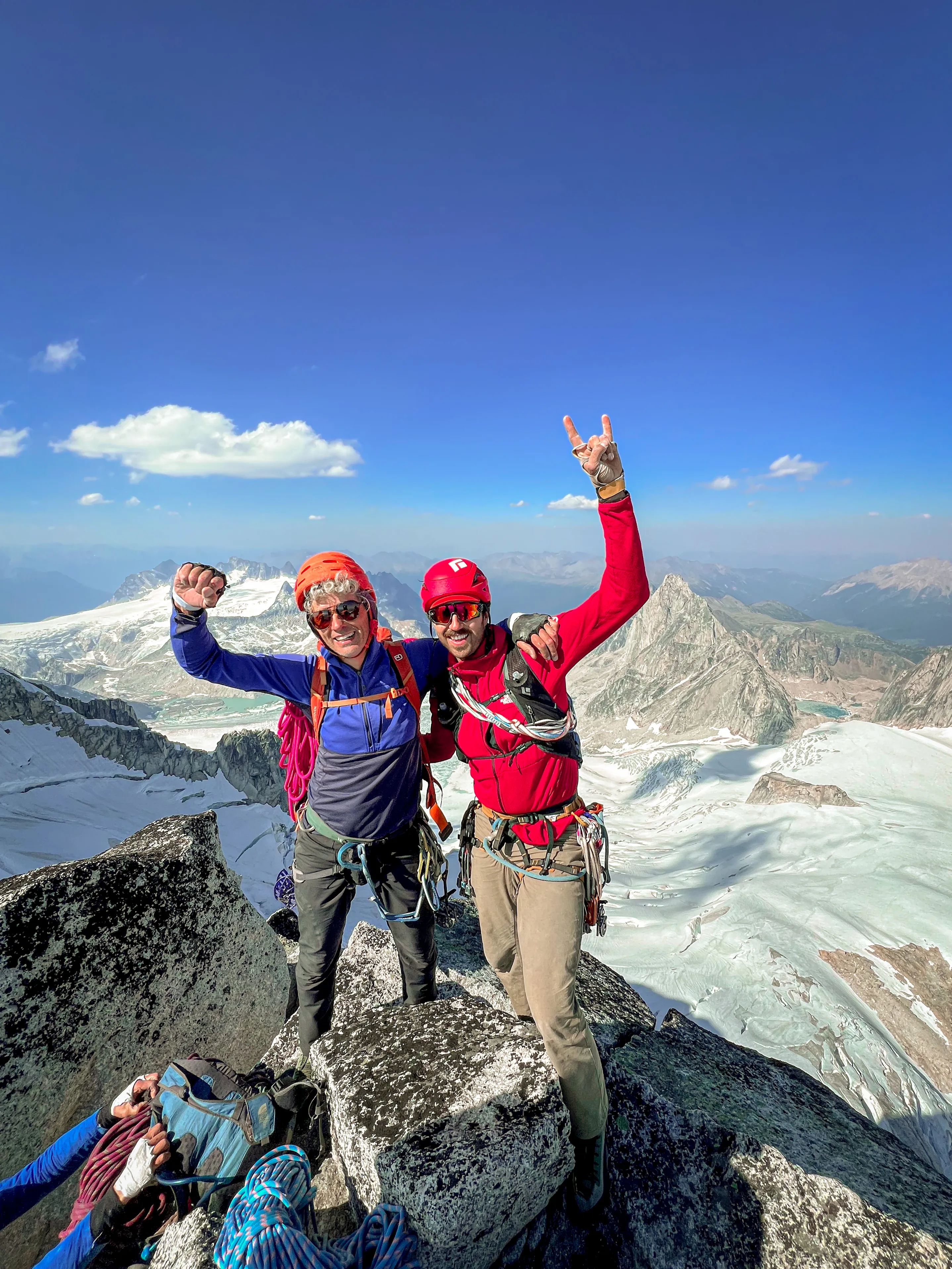
After that, we were unlocked. The remaining climbing passed with less resistance until the angle eased and we reached the summit with the party ahead of us. The team behind arrived soon after. Three parties that had spent the day separated by a few pitches were suddenly standing together with the climbing finished and the descent still to solve.
One rope free
Ropes getting stuck in the Bugaboos is common enough that all three teams agreed on a simple system for the rappels: leapfrog them. We kept the ropes separate and always left one rope free. If the active rope jammed in a crack or hung up on a flake, another would still be available.
It was slower than trying to skip stations with ropes tied together, but it gave the descent some redundancy. Teams moved past one another, ropes changed hands, and each rappel was prepared before the climbers above arrived.
Below us, the east face dropped toward the glacier. The climbing had occupied our minds for years. Now the part the guidebook compresses into a single word—descent—was about to begin.
The system worked. Rappel by rappel, the summit receded above us until our feet finally reached the Upper Vowell Glacier. We coiled the ropes, shouldered the weight again and started the long walk toward the Pigeon–Howser Col.
By the time we dropped toward East Creek, the sun was setting. The effort of the day had settled into everything. Chris and I were physically empty, mentally dulled and carrying the strange emotional exhaustion that arrives after spending so long completely committed to a single task.
Neither of us wanted to cook. We had already agreed on the evening’s full itinerary: put away the gear, take a wet-wipe shower and crawl into our sleeping bags.
Then a voice came from the camp next door.
“Hey! You guys want burgers and salad?”
The North Face team had cooked more than they could eat and offered us the rest. After a day of gels, bars and whatever else we had managed to swallow between pitches, a burger and salad felt impossible in its perfection.
I do not know whether Matt Segal or Jesse Huey will ever read this, but Chris and I will always remember that meal. It was a small act of generosity delivered at exactly the right moment—the kind that can become inseparable from the much larger day around it.
Nothing left to prove
The next day was unconditionally a rest day. We were too spent to pretend otherwise.
The day after, we walked over to look at Solitary Confinement on Prince Albert Spire. The glacier had receded so far that the bottom of the crack now began roughly ten metres above us. Reaching it would have required a runout section of insecure slab before the first tiny RP placement. We had not brought any RPs. After the Beckey–Chouinard, neither of us felt a need to manufacture another adventure, so we turned around.
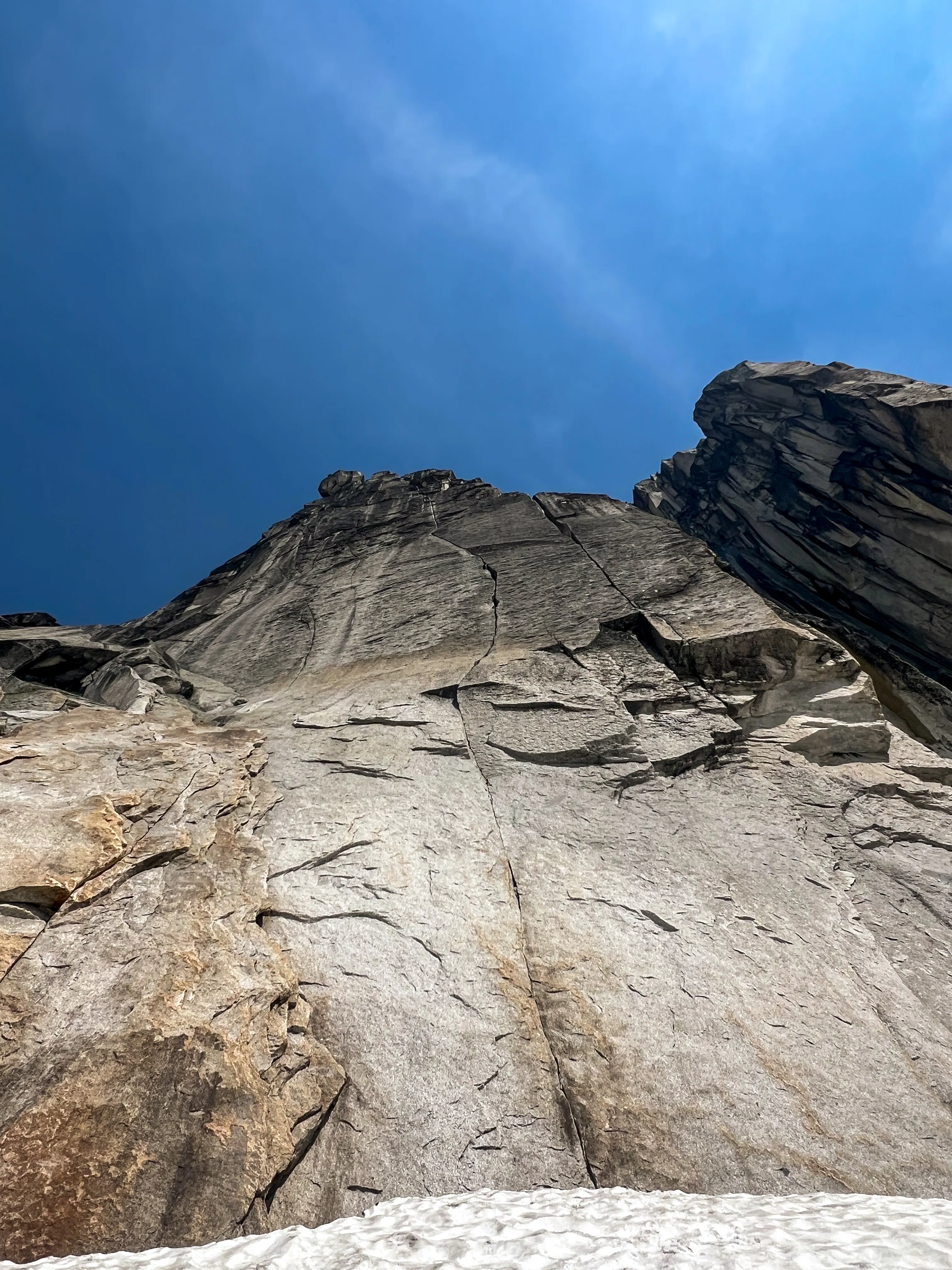
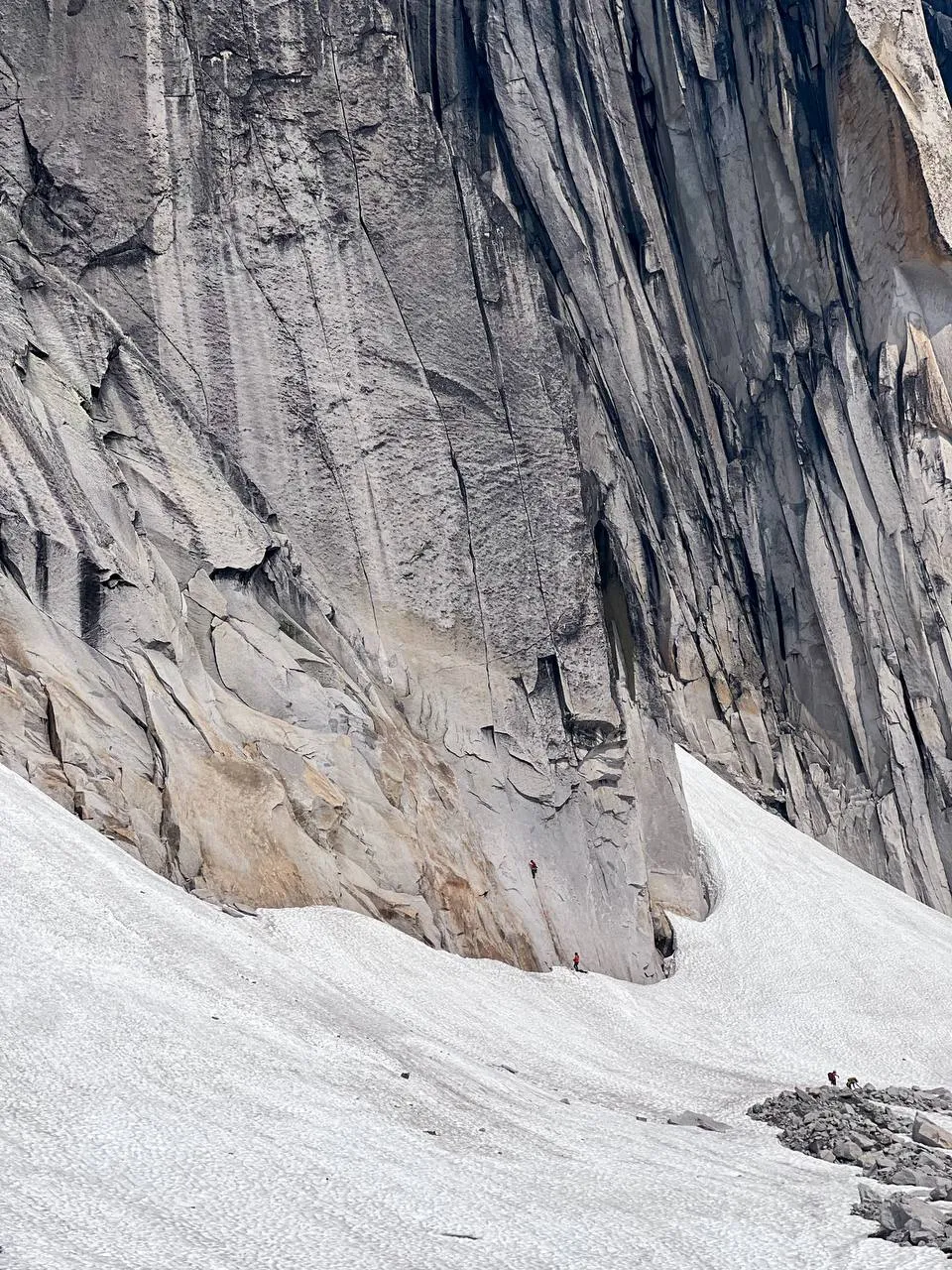
We spent what remained of the trip at camp: sitting in the sun, eating, drinking water and letting the previous days catch up with us. There was no pressure to find another route or make the trip add up to more. We had come in with one objective, and it was done.
On our final day, smoke began rolling into the range as the surrounding forest fires intensified. The spires faded behind it while we hiked out. It felt almost like reassurance. The window had opened just long enough, and now it was closing behind us.
What remains
A goal carried for years can become enormous in the imagination. I expected the route itself to dominate the memory—the 5.10 pitch, the Great Dihedral, the wet climbing above the bivy ledge, the summit. Those pieces remain, but they are not what returns first.
I remember the pace of breakfast changing when the headlamps appeared. I remember arriving at a belay rattled and watching Chris choose the finger crack. I remember keeping one rope free on the descent. I remember someone calling across camp with an offer of burgers and salad when we had nothing left.
Moving to Squamish had been a practical decision. I needed granite mileage and the ability to jam well enough to be useful on this route. Years later, that preparation allowed Chris and me to meet the day as it came. We traded leads, made decisions without much discussion and took over for one another when the climbing asked us to.
That is what finishing the Beckey–Chouinard meant in the end. Not simply standing on the summit of South Howser, and not crossing a route off a list. It was being ready when our weather window arrived, then climbing the line together in the way the day required.
By the time the smoke covered the spires, there was nothing left to add.