Sample mid-fat touring ski
A 95 mm Touring Ski, After One Season
Where a mid-fat touring ski works, where it compromises, and what became clear after a full winter in the Coast Mountains.
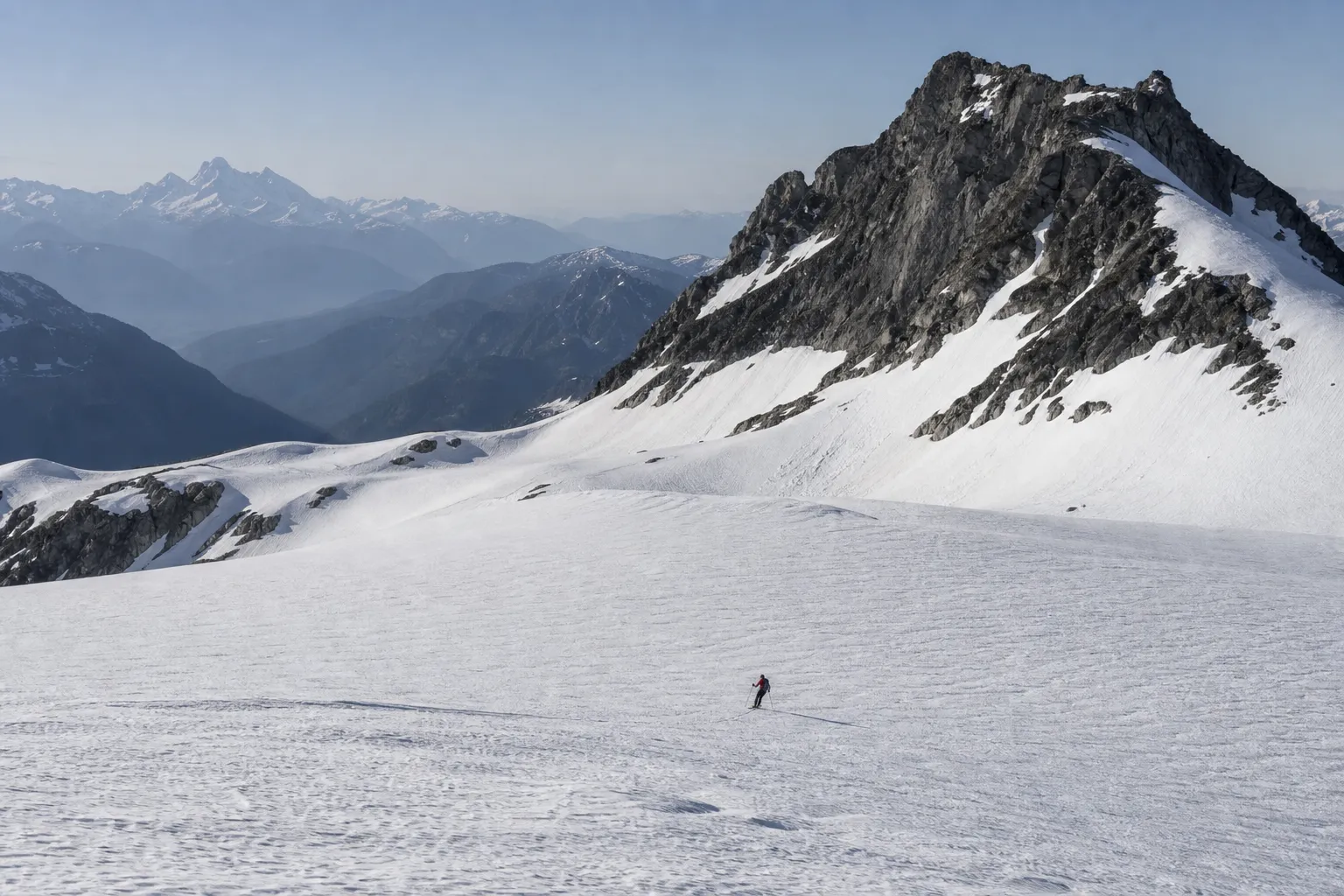
Verdict
A dependable middle ground for varied mountain days, provided low weight is not the only priority.
- Best for
- Skiers who value downhill composure without carrying a heavyweight setup
- Conditions
- Coastal powder, wind board, spring corn, and long glacier approaches
- Disclosure
- Demo content; no real product is being reviewed or endorsed.
This is sample review content showing the format. Replace it with field-tested notes on a real product.
The interesting thing about a ski around 95 millimetres underfoot is not that it excels in one narrow set of conditions. It is that it is asked to be acceptable in almost all of them. Over a western Canadian winter, that can mean deep coastal snow, refrozen exits, long carries, and several kinds of breakable crust in the same day.
This fictional test ski was used for 32 days, mostly on human-powered trips. The goal was to evaluate the category honestly: enough time on the skintrack to notice weight and kick turns, and enough variable skiing to understand where the shape helps or gets in the way.
Uphill
A mid-weight construction is noticeable on large vertical days, though less than poor balance or an awkward skin system. The ski tracks predictably and gives enough platform for soft, uneven skintracks. On firm sidehills, its width asks more from the boot than a narrower spring ski would.
The category makes the most sense for trips where the descent matters and the approach is substantial but not competitive. For very long traverses, a lighter and narrower setup still has a clear advantage.
Downhill
The extra mass pays back quickly in inconsistent snow. Rather than being deflected by every patch of wind effect, the ski stays composed and gives the skier time to respond. In soft snow it offers enough surface area for most days without feeling cumbersome in tight terrain.
There are limits. Deep, low-density storm snow rewards more width, while true spring missions reward less. The 95 mm platform succeeds by making those compromises manageable, not by making them disappear.
Durability and fit
Long-term reviews should distinguish design from maintenance. Edge damage, topsheet wear, binding retention, and skin compatibility all deserve notes after enough days have accumulated. Boot choice and mount point can also change the experience substantially and should be documented alongside the ski itself.
For a real review, this section would record observed wear, repairs, the exact tested length and mount, skier size, and any changes made during the season.