

Climbing Bastardo: 12 Pitches Above Brandywine Meadows
Climbing Bastardo, the 12-pitch 5.8 alpine sport route above Brandywine Meadows, with notes on the 4x4 approach, pitches, descent, and gear.
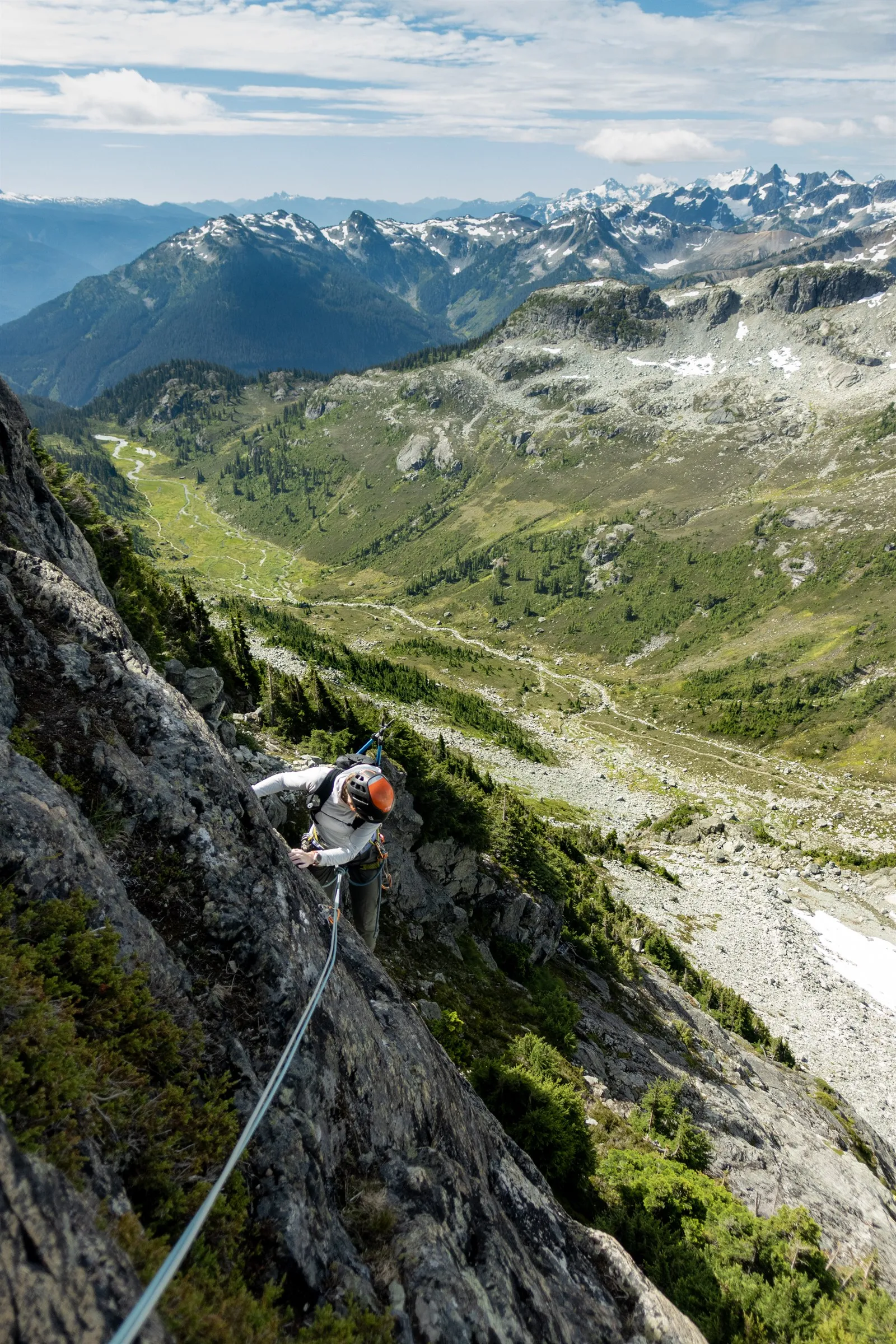
Rain was coming for the August long weekend, so Linsey and I took Friday off. We could make up the work once the weather closed in. At about seven that morning, we left Squamish and drove north.
Bastardo had been on our list for a while. The route is long, moderate and fully bolted, but it still sits high enough on Metal Dome to make the climbing only one part of the day. The approach crosses Brandywine Meadows. The route looks over the Brandywine Massif. The descent follows a ridge before dropping back into the valley.
It ticked all the boxes.
The road to Upper Brandywine
We drove north, turned onto Callaghan Valley Road and took the Brandywine Creek Forest Service Road past the transfer station. The road deteriorated as we climbed. Deep ruts and washouts cut across several of the steeper sections. I put the truck into four-low, which made the driving straightforward, but not fast.
This is not an optimistic all-wheel-drive road. On the way out, we passed an SUV trying to reverse down one of the hills after getting stuck on the climb. There is little reliable cell service in the valley, so a mechanical problem can become a much larger project. We had a Garmin inReach with us and a truck capable of getting back down what we had driven up.
We reached the upper trailhead at about 8:30. The first part of the trail climbs gently toward the old campground. No-camping signs were posted throughout the site. I’m not sure when that changed, but anyone planning to stay overnight should follow the current signs rather than an older trip report.
The Bastardo approach
Beyond the old campground, the trail opens into Brandywine Meadows. The valley runs toward Brandywine Mountain and its glacier, with a waterfall dropping from the bench on the right. That waterfall is the useful landmark. The approach eventually climbs above and around it.
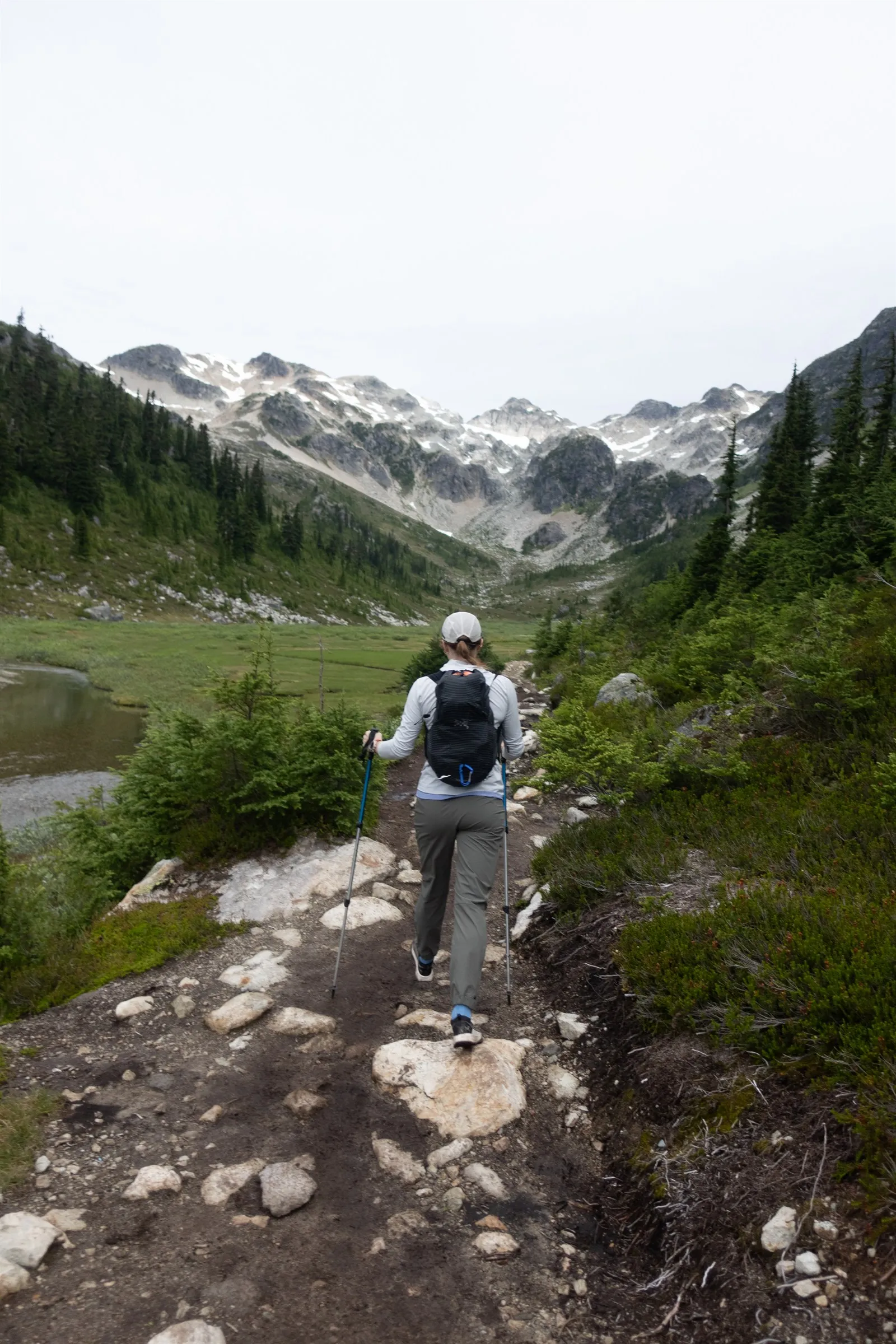
Near the back of the bowl, before the trail reaches the rock, we turned toward Metal Dome and zigzagged up the large boulder field. At its upper end, the boulders trend right. When they finally run out, the line turns up and left toward the marked path above the waterfall.
The ground between the boulders and the trees is steep grass and loose dirt. It was wet with morning dew and much slicker than it looked. We don’t usually bring poles on climbing days. That morning, though, we were very happy to have them.
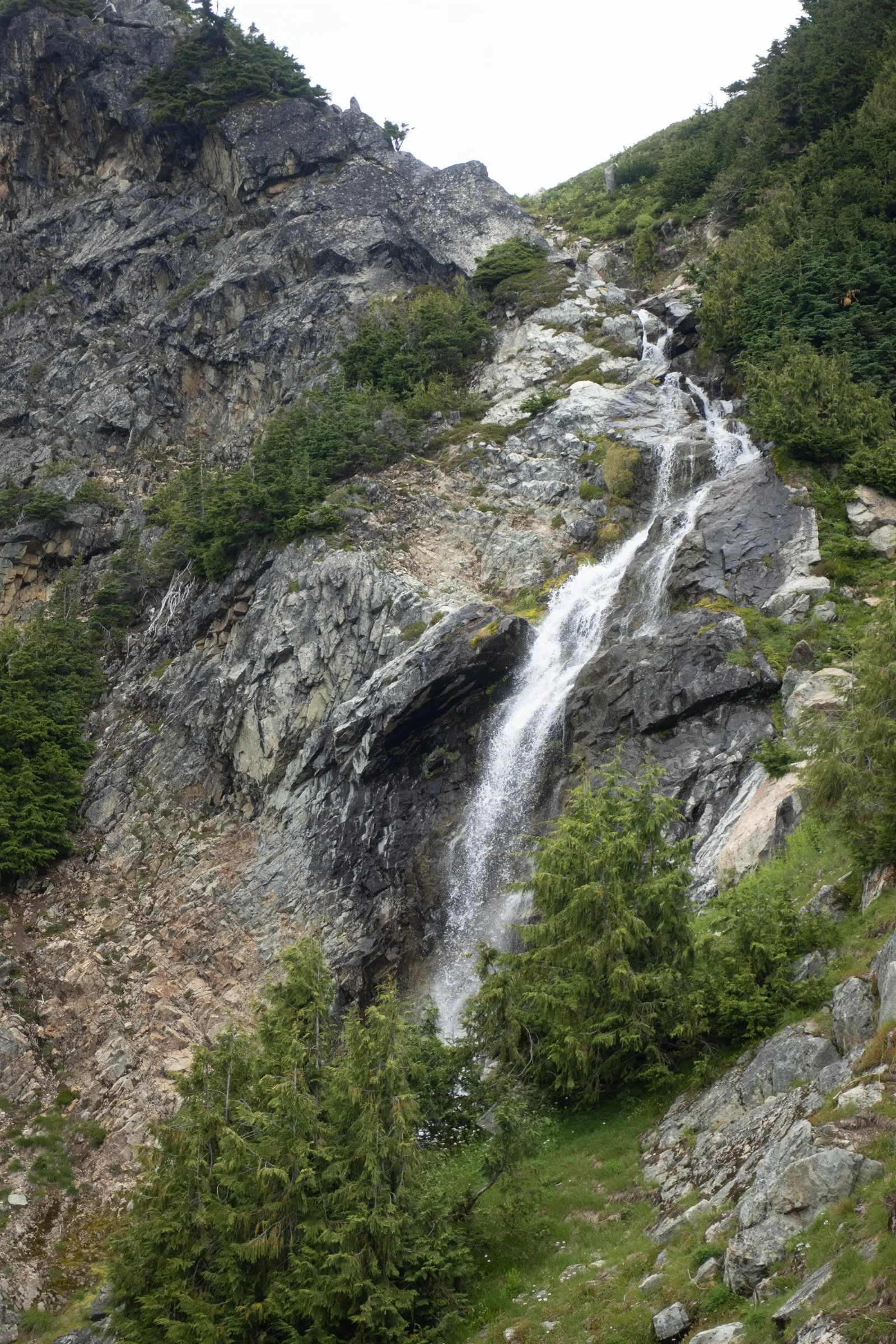
The path enters the forest above the waterfall. There is a short section of pushing through brush and pulling on trees before the traverse reaches a clearing on the elevated bench. From there, the base is close. Orange flagging marked the start, including the first bolts. In general, the approach was flagged well. The descent was another story.
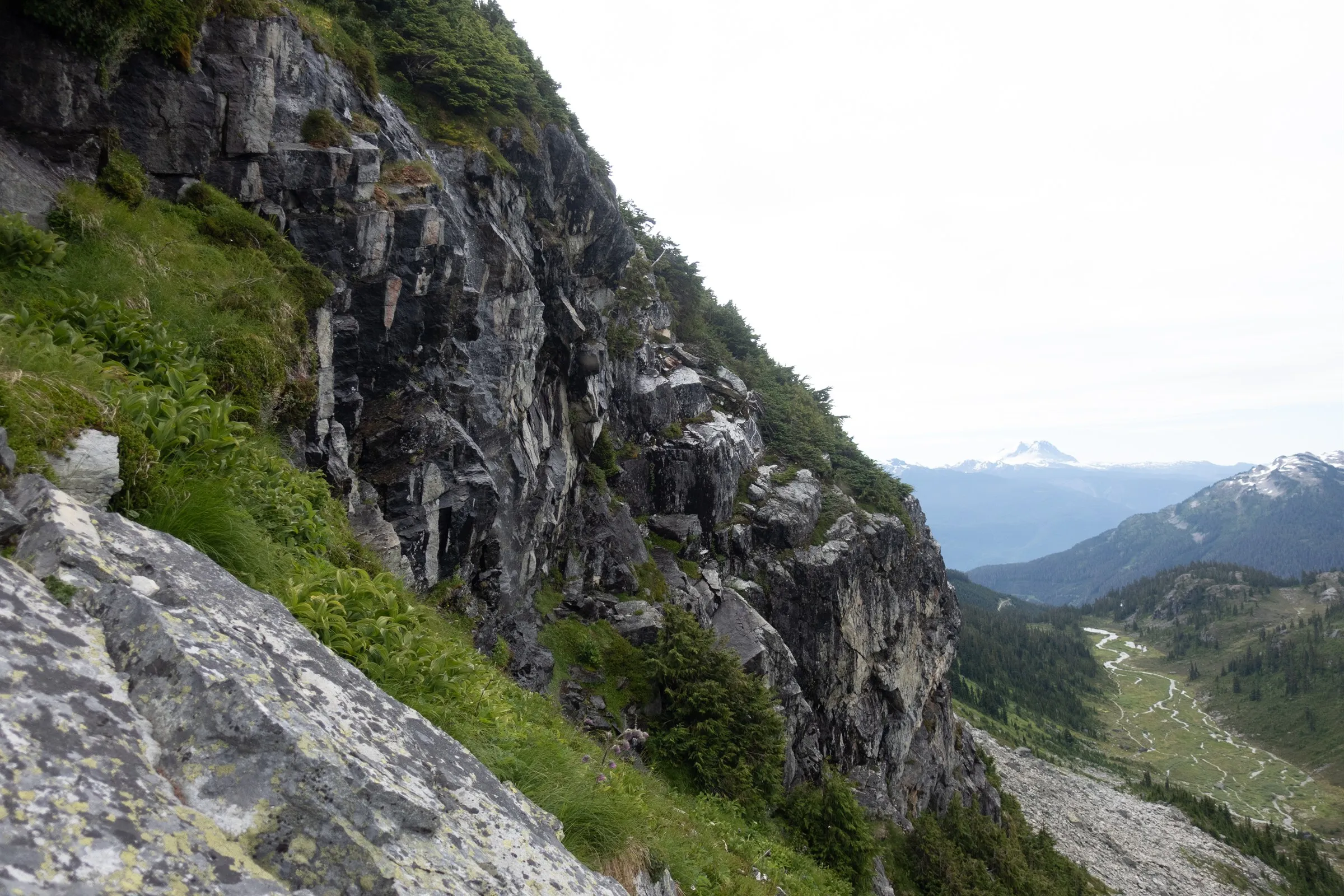
Climbing Bastardo pitch by pitch
We started climbing at about 9:30. I led all twelve pitches and we belayed each one normally.
The grades on the first four pitches range from 5.4 to 5.7, but my memory of them is mostly scrambling with a rope on. The 5.7 is a one-move wonder rather than sustained climbing, and then the angle eases again. A team already comfortable simul-climbing together could save time through some of this terrain. Wet heather, loose alpine rock and your partner’s experience all matter here. We chose to pitch it out.
The route changes at pitch five. The 5.7 pitch begins steeply and then moves left.
Pitch six follows with the route’s 5.8+ crux and a pull through the black roof.
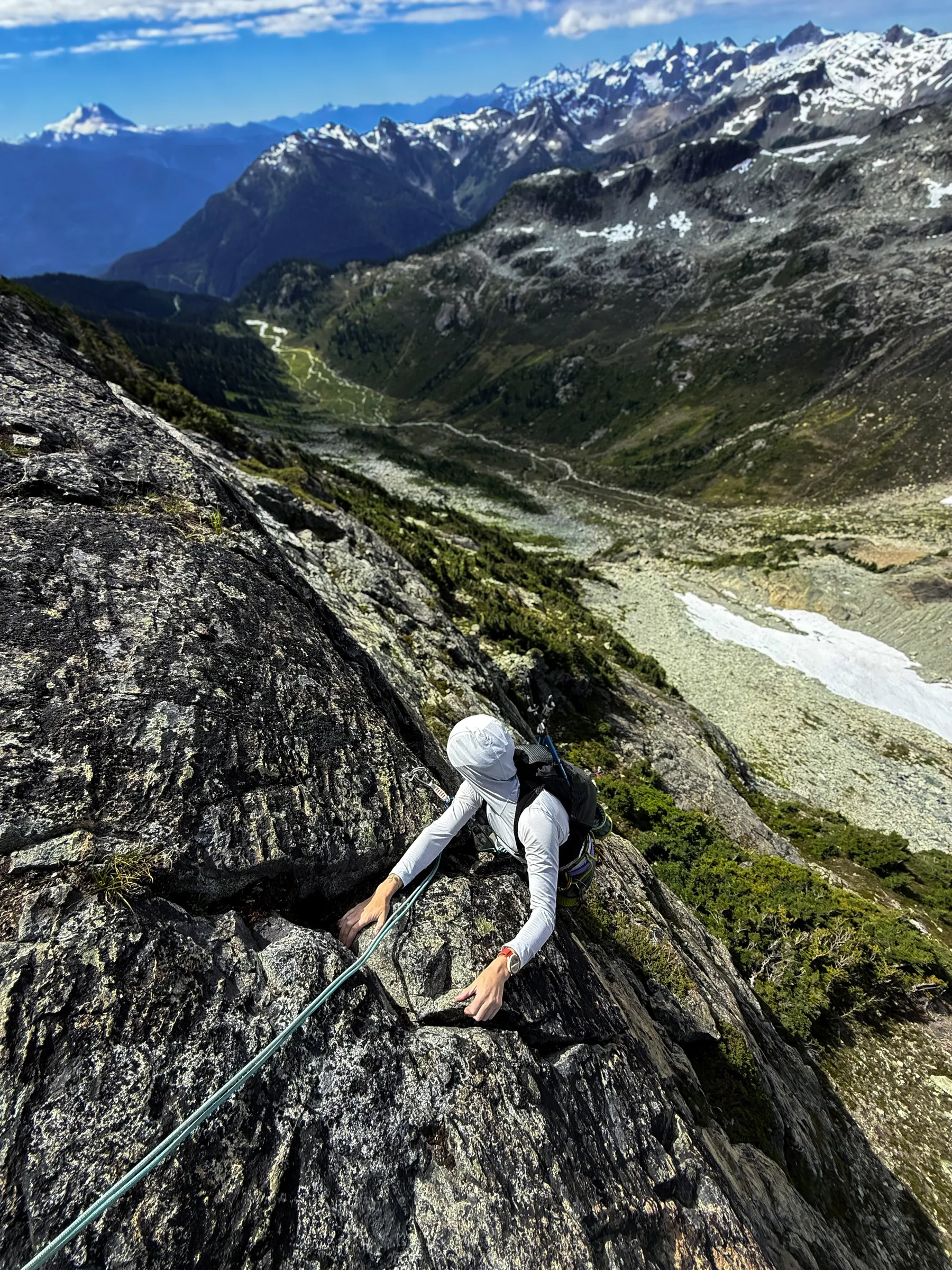
These were my favourite pitches of the climb. The rock is better, the position is open, and by then Brandywine Meadows has dropped far enough below that the route begins to feel properly alpine.
Above the roof, Bastardo alternates between low-fifth terrain and three more 5.8 pitches. None of it is sustained for long. The route keeps moving across ledges, short walls and open slabs, always with the valley behind you.
Pitch eleven is the final 5.8 and provides the sting in the tail. It trends left before steepening above an alcove. The holds are good, but the wall is steep enough to feel imposing if 5.8 is near your limit or if most of your climbing happens on lower-angle rock.
“If you’re not on a jug, keep patting around until you’re on one,” I told Linsey. “Then keep moving your feet up.”
That was pretty much the pitch. Steep, positive and fabulous climbing.
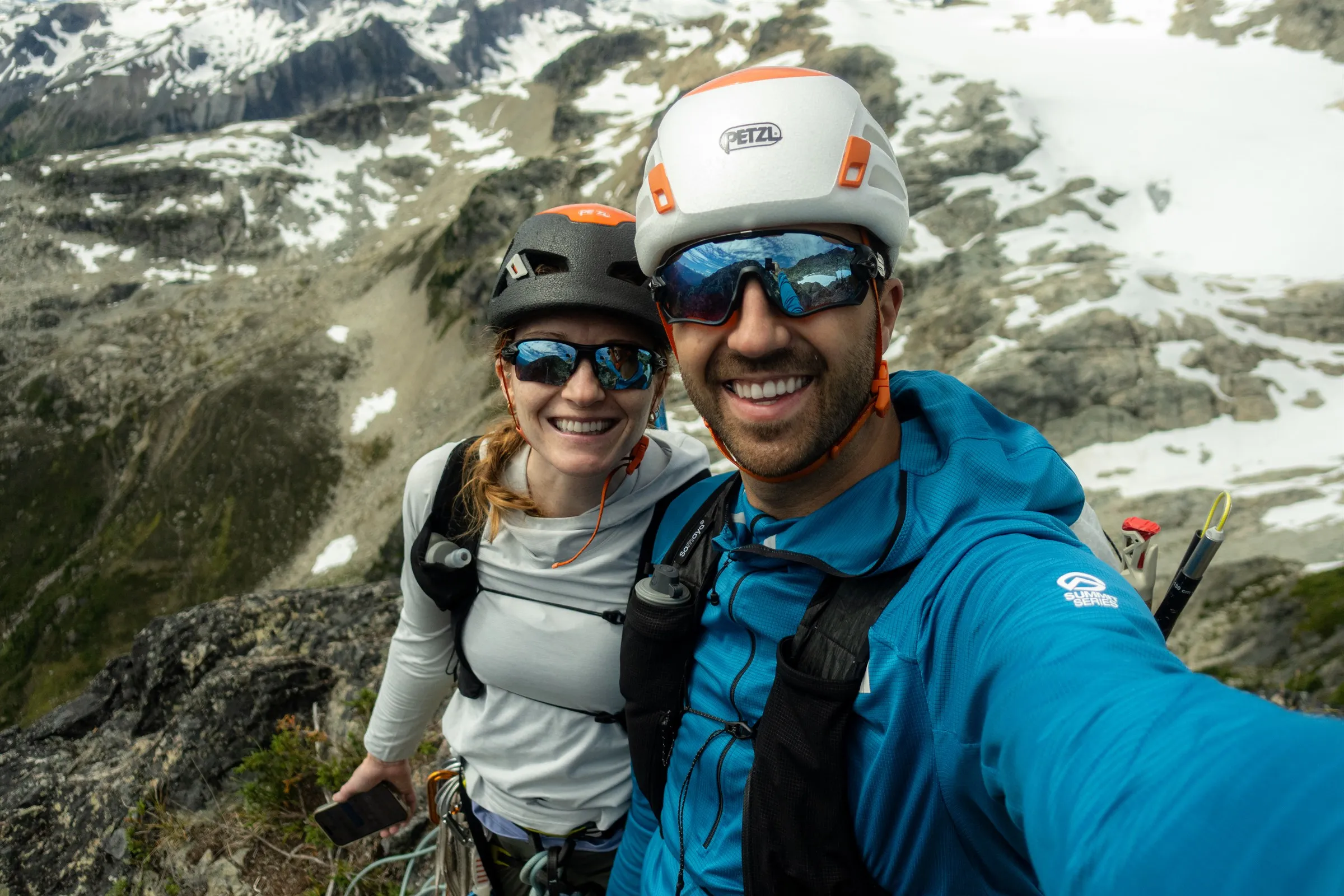
Pitch twelve is a short 5.5 step followed by scrambling to the top. We arrived at noon and found a flat, sheltered spot just beyond the route where we could get out of the wind, take off our climbing shoes and eat lunch.
Our fast-and-light kit
We carried ten alpine draws and two sport draws fitted with Dyneema dogbones. The longer draws helped manage the wandering line and the short relocations between some pitches.
Our rope choice was more specialized. We brought a 70-metre EDELRID Rap Line Protect Pro Dry 6 mm and doubled it to lead on two strands, giving us 35 metres of working rope. Every climbing pitch fit inside that length, while the full 70 metres remained available if weather forced us to rappel the route.
EDELRID calls the Rap Line an accessory cord with a dynamic safety reserve and states that it withstands two required standard falls in the dynamic twin-rope test. That does not make it interchangeable with the conventional 60-metre climbing rope recommended in the topo.
For us, though, it was the right choice. I am comfortable leading this kind of moderate climbing on good alpine rock, and the Rap Line gave Linsey and me a light system that let us move quickly without carrying much gear. We could still get into technical terrain, while Linsey had the security of climbing on a rope. The day felt like a real success for this setup. I will absolutely use it again for outings like this.
My harness, helmet, rope, draws, layers and food all fit inside the Samaya Ultra Pace 20 + 3 L. The vest fit kept the load close on the approach and while climbing. Bastardo was exactly what I had in mind for it: a fast technical day where everything needs to fit and stay put. One outing isn’t a verdict, but it was a good start.
The descent to Brandywine Meadows
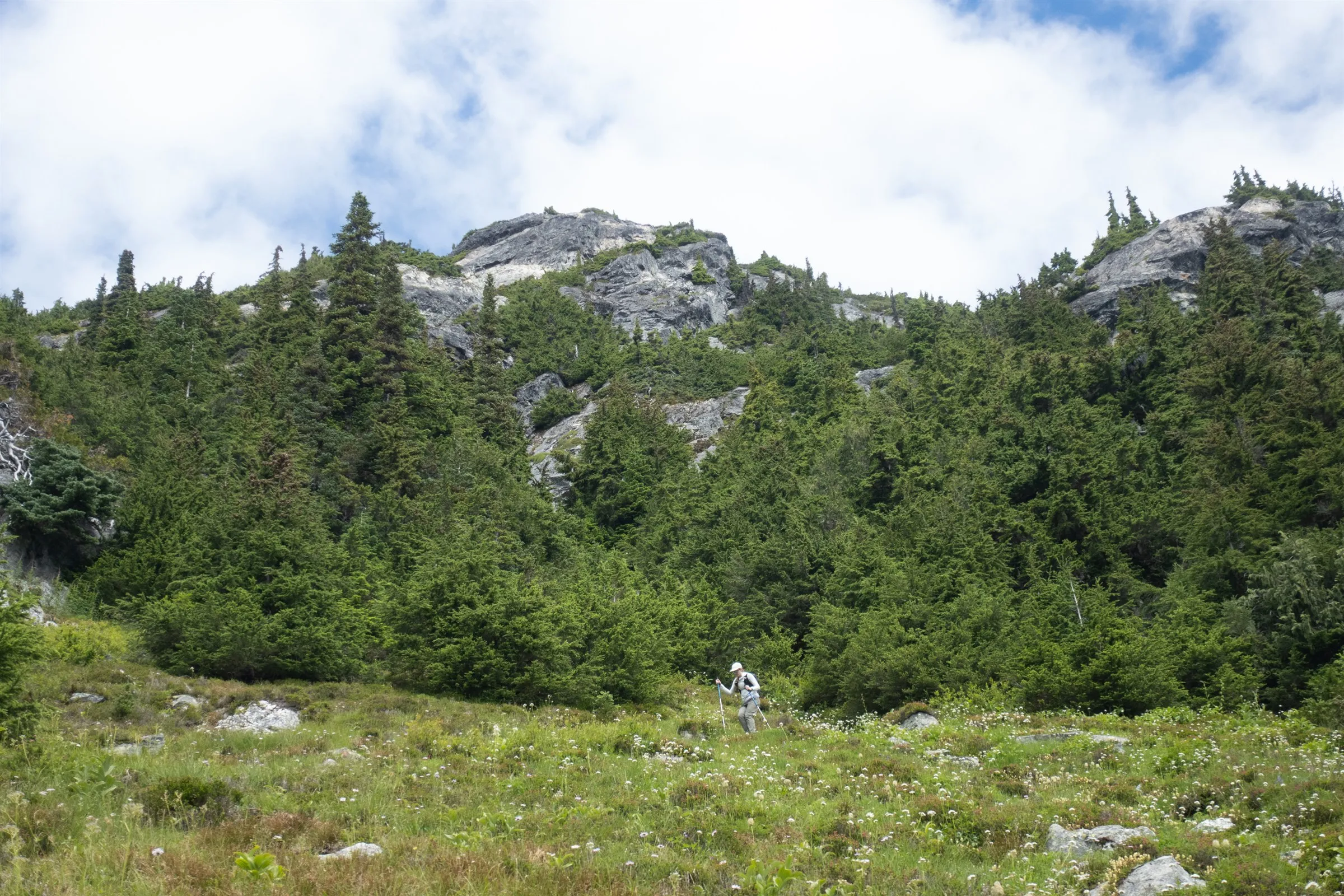
From the top, we followed the ridge southwest. A worn path crosses the upper meadow before reaching the ridge proper. The scrambling is straightforward apart from one exposed fourth-class section. Beyond it, we crossed a short patch of remaining snow as the bowl opened below us.
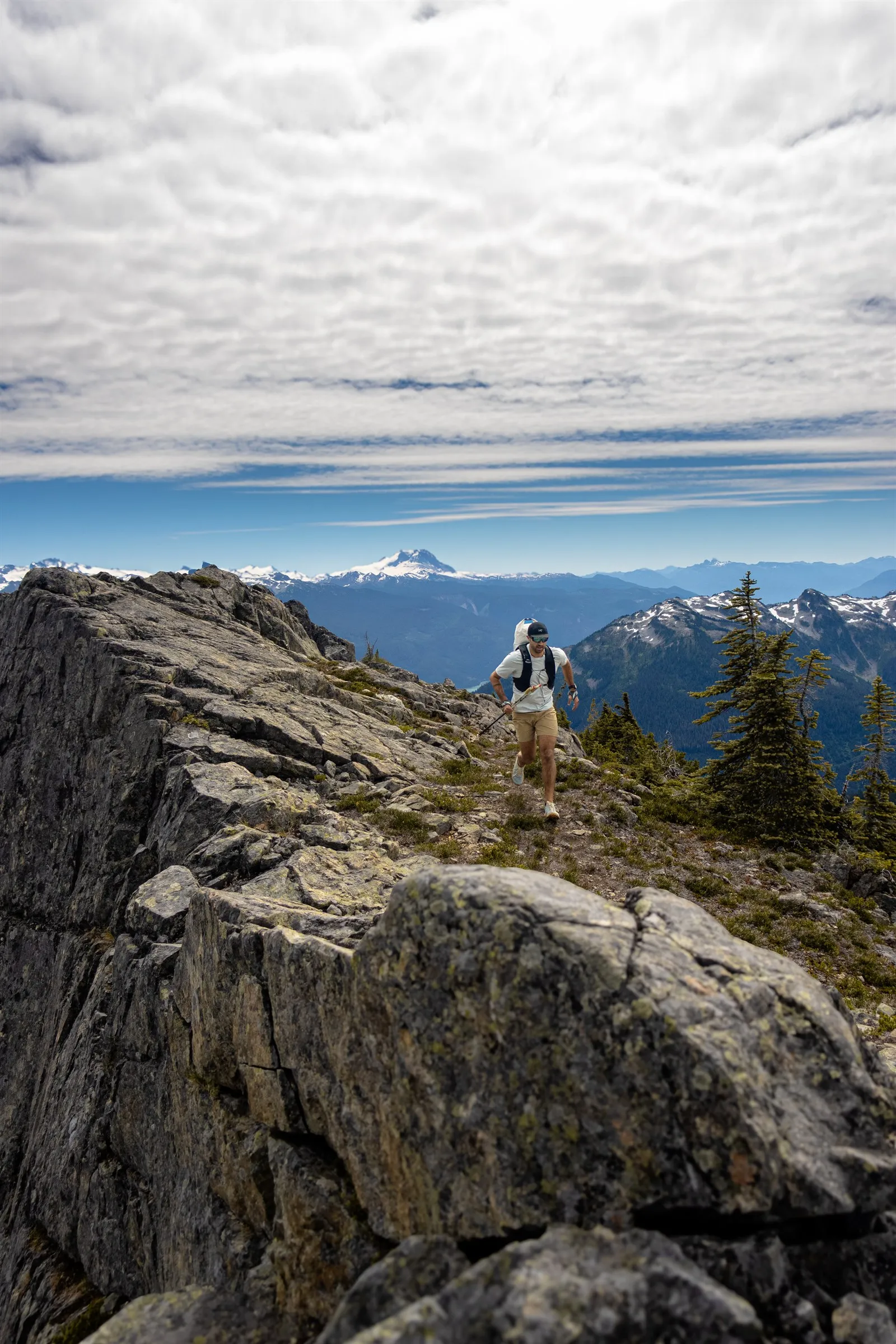
At this point, we could continue toward Metal Dome and connect with the Metal Dome trail. That would leave us below the upper trailhead and require a run back up the logging road. We hadn’t parked for that version of the day, so we turned down toward Brandywine Meadows instead.
The topo describes a faint trail that works through the boulder field and ledges. We found the marking intermittent enough that it never felt like a trail we could simply follow. We traversed back and forth, testing breaks in the terrain and making sure each line didn’t end above a cliff.
I kept returning to a Mark Twight line I have carried for years: “When you encounter difficulties, traverse.”
Eventually the broken ground opened into steep grass. The dew had burned off, but the slope was still slick, so we worked skier’s left toward the boulder field and descended through it instead. The boulder hopping was tedious and slower than the meadow would have been in dry, low-angle terrain. It was also fun travel, and it kept us off the worst of the grass.
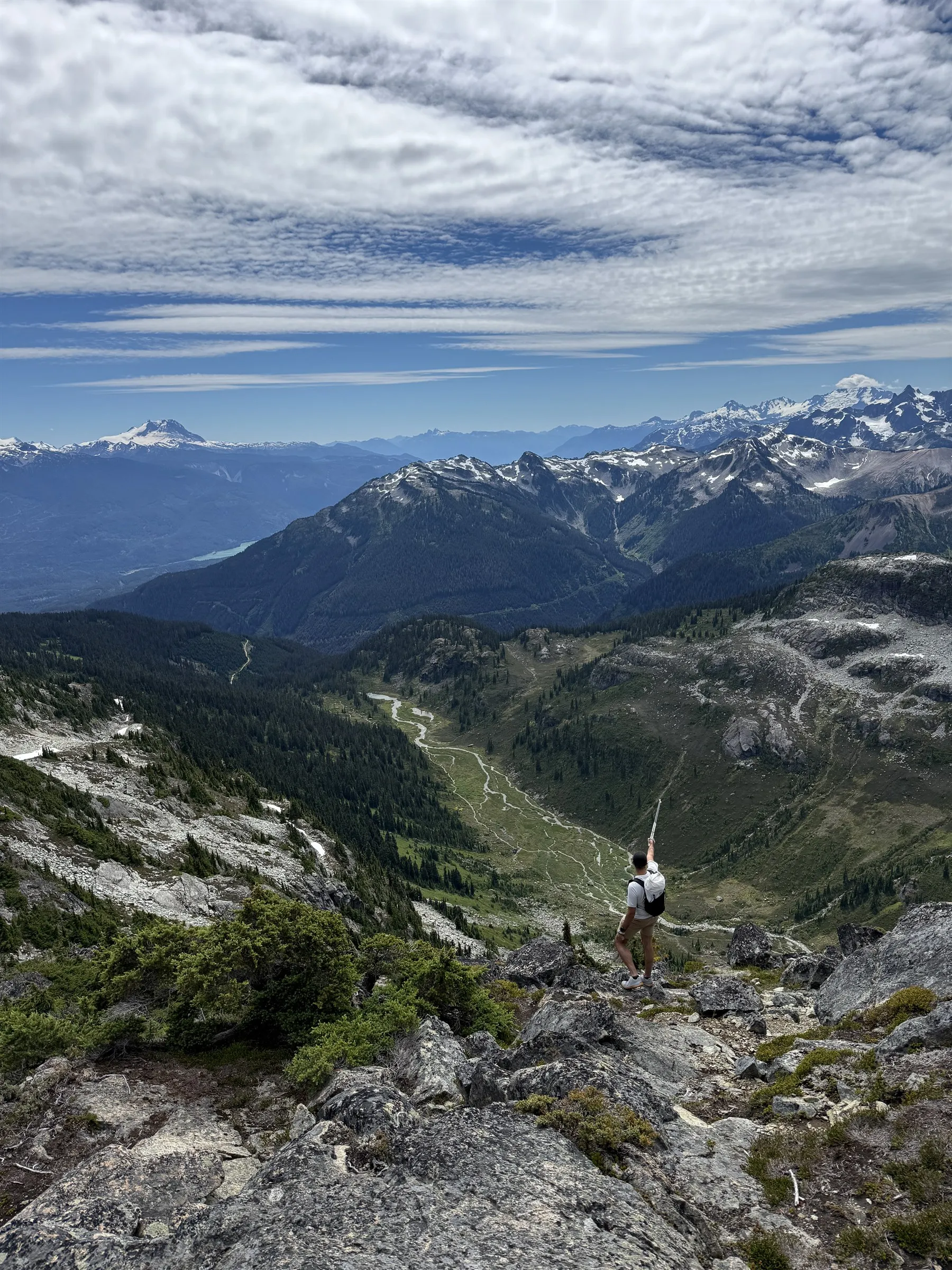
Once we reached the valley floor, the route-finding ended. We retraced the approach trail through the meadow and were back at the truck by two.
Three ways to make the day bigger
We took the compact option: climb Bastardo, follow the ridge and drop directly back into Brandywine Meadows. It still gives you the climb, some exposed scrambling and a route-finding descent, but skips the road run at the end.
For a longer day, you could continue toward Metal Dome, descend through the Metal Dome meadows and finish along the logging road. Parking lower would mean starting with a longer run up the road, but you would finish back at the vehicle. That version starts to feel more like a skyrunning outing with a climb in the middle.
The version I want to try next continues farther along the ridge toward Brandywine before circling back into the meadows. We haven’t completed that traverse, so this is an idea rather than route beta. On the map, it looks like the kind of Euro-style alpine romp I wish we had more of around the Sea to Sky. You climb the route, stay high on the ridge and run back into the valley.
On our way down the FSR, the driver of the all-wheel-drive SUV was still trying to solve the hill. I shifted the truck into four-low and eased past the washouts toward Squamish.
By the time we reached pavement, the longer traverse was already on next season’s list.