

Samaya Ultra Pace
Samaya Ultra Pace 20 Review: The Fast-and-Light Alpine Sweet Spot
After roughly fourteen summer climbing days, the Samaya Ultra Pace 20 finds a useful middle ground between a running vest and a conventional alpine pack.
Summer verdict
The Ultra Pace is an excellent 20 + 3-litre vest-style alpine pack. Its secure fit, useful capacity, and light modular carries make it unusually good for moving quickly through technical terrain—as long as it is not asked to carry like a conventional 30-litre pack.
- Best for
- Fast-and-light Coast Range objectives when a 14 L vest is too small and a conventional 30 L pack is unnecessary
- Conditions
- Squamish multipitch climbing, alpine rock, snow, scrambling, rain, and wet granite
- Disclosure
- Purchased with personal funds. Samaya had no editorial input and did not review this article before publication. Product links are not affiliated.
Manufacturer data
At a glance
- Volume
- 20 + 3 L
- Minimum weight
- 365 g S/M · 370 g M/L
- Equipped weight
- 425 g S/M · 430 g M/L
- Size tested
- M/L · 38¾ in at the lowest rib · 6 ft 2 in tester
- Main / base fabric
- 50D / 150D Dyneema Composite Fabric Hybrid with woven polyester faces
- Waterproofing
- 20,000 mm · manufacturer-stated waterproof seams
- Included carries
- Removable ski, ice-tool, and pole attachments
Test criteria
Field scorecard
9.4Overall / 10
- Climbing stability
- Stayed planted without interfering with a harness, helmet, high steps, or cross-body movement.
- 10.0 / 10
- Carry and fit
- The vest harness and ATOP adjusters distributed a substantial alpine load without shoulder or side pressure.
- 10.0 / 10
- Access
- Front storage works well with 500 mL flasks, while the shared pocket volume and roll-top require compromises.
- 8.5 / 10
- Summer alpine versatility
- Carried a RAD Line, helmet, climbing equipment, axe, and poles securely without unnecessary hardware.
- 9.5 / 10
- Durability and weather
- No functional wear or water ingress observed; long-term abrasion and winter performance remain untested.
- 9.0 / 10
The Samaya Ultra Pace is a very good 20-litre pack. Trouble begins when you ask it to be a 30-litre one.
That sounds obvious. It is also how many disappointing pack choices begin: buy the smaller, lighter option, keep adding equipment, then blame the shoulder straps when the result carries badly.
After roughly fourteen summer climbing days, I can recommend the Ultra Pace for fast-and-light Coast Range objectives. I have worn it on short Squamish approaches, kept it on for multipitch climbing, carried a compact kit up all twelve pitches of Bastardo, and loaded it for a 38-kilometre traverse of the Tantalus Range. It carries more securely than my Black Diamond Distance 15, holds meaningfully more equipment, and adds the alpine attachments a running vest usually leaves out.
It is still a sweet spot, not unlimited permission to keep packing.
The load test
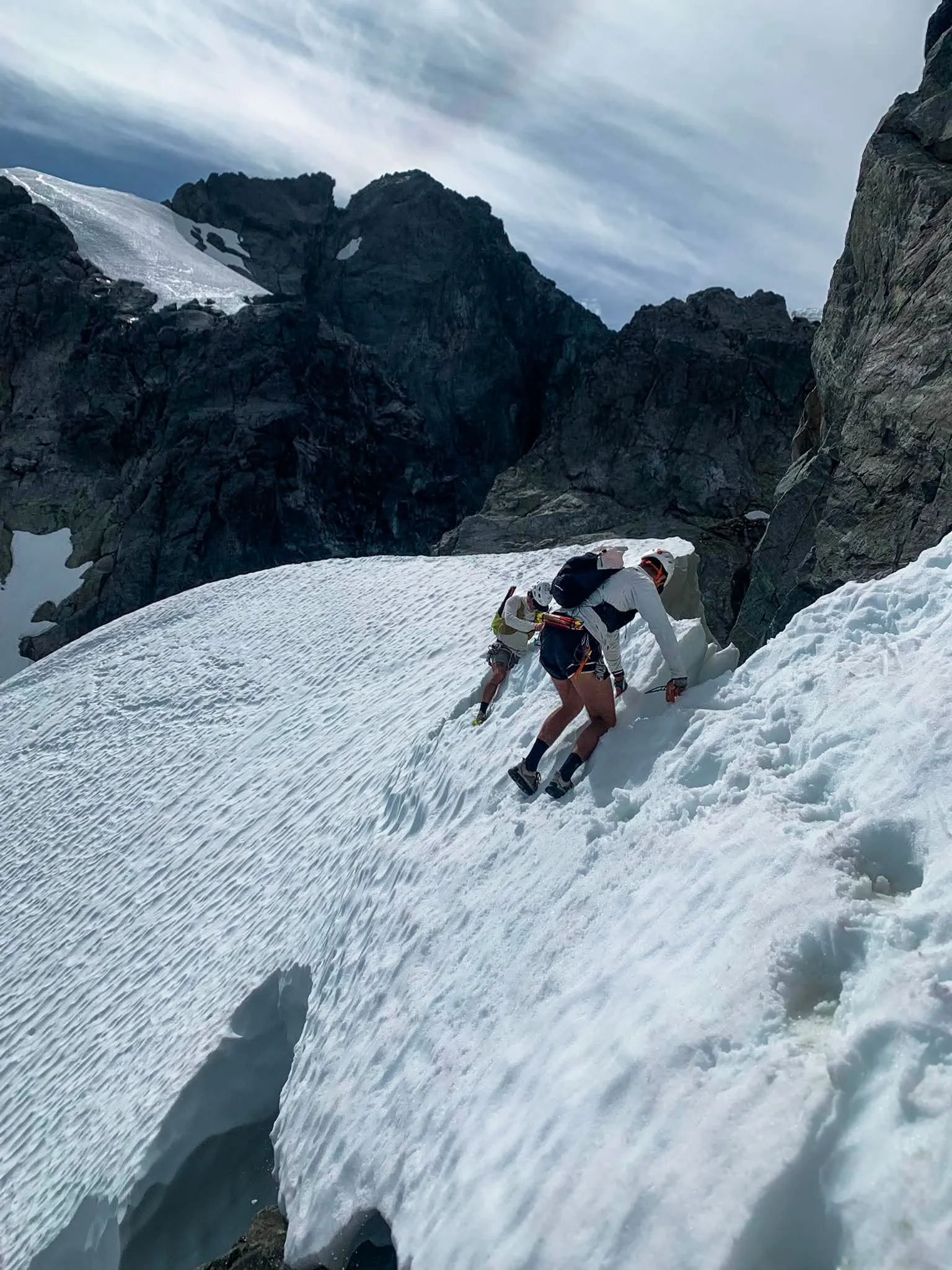
The Tantalus Traverse was the day that answered the load question. The pack was close to full without being crammed. The main compartment still had some room, and I could have used more of the three-litre rear stretch pocket.
Inside and attached to the pack were two 500-millilitre soft flasks, a two-litre reservoir, food for a long day, phone, camera, poles, crampons, a Petzl Gully axe, helmet, glacier harness, rescue equipment, a 30-metre RAD Line, and enough clothing for exposed snow and the possibility of an unplanned night.
I did not weigh the complete pack, so I am not going to reverse-engineer a precise total. The known pieces establish a useful floor: three litres of water (roughly 3,000 grams), the 430-gram equipped M/L pack, a 660-gram RAD Line, and a roughly 280-gram Gully. Together, those items weigh about 4.4 kilograms. Food, crampons, helmet, harness, rescue equipment, clothing, electronics, poles, flasks, and the reservoir all came after that.
Three litres of water still felt like three litres of water. A vest harness cannot make six extra pounds disappear. What it did was stop that weight from becoming shoulder pressure, a pack digging into my sides, or a load swaying while I scrambled.
It carried remarkably well.
The fit is the reason to buy it
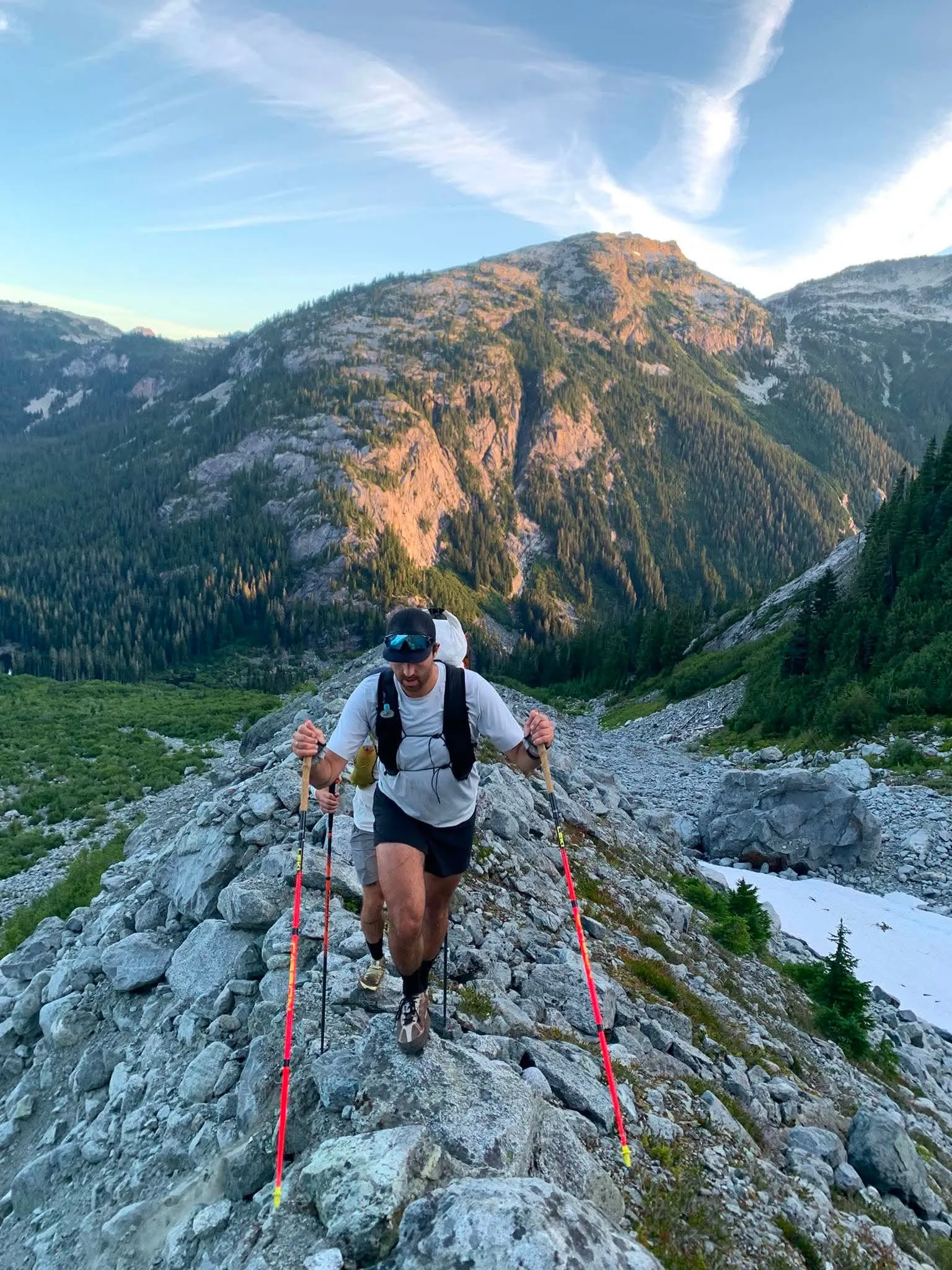
I am 6 feet 2 inches, normally wear a men’s large T-shirt, and measure 38¾ inches around my lowest rib, which is where Samaya specifies measuring. I use the M/L Ultra Pace. On my frame, the pack fits like a glove and still has room to expand for someone larger.
The upper sternum strap is rigid and establishes the fit across the chest. The lower strap is elastic, allowing the harness to move while I breathe hard. ATOP dials on either side provide the final adjustment. I kept calling them BOA dials while testing because the mechanism is familiar, but ATOP is the correct name.
The system is a 10 out of 10 so far. The dials cinch the pack around my torso, hold their adjustment, and have worked flawlessly.
Samaya uses three layers of EVA Ariaprene foam rather than a rigid frame. It gives the pack enough structure to hold its shape and keeps carefully packed equipment from pressing into my back. I still pay attention to where hard objects go—the foam is not magic—but I have not felt them through the panel in normal use.
Breathability is comparable to the Distance 15 and other running vests I have used. The panel gets damp after a long effort, as any pack against my back will, but it has not become saturated or held an unusual amount of moisture.
On Bastardo, I wore the Ultra Pace for every pitch. It did not interfere with my harness, touch my helmet, restrict a high step, or get in the way when I reached across my body. I could climb without treating the pack as another object to manage. That is the point of the vest fit.
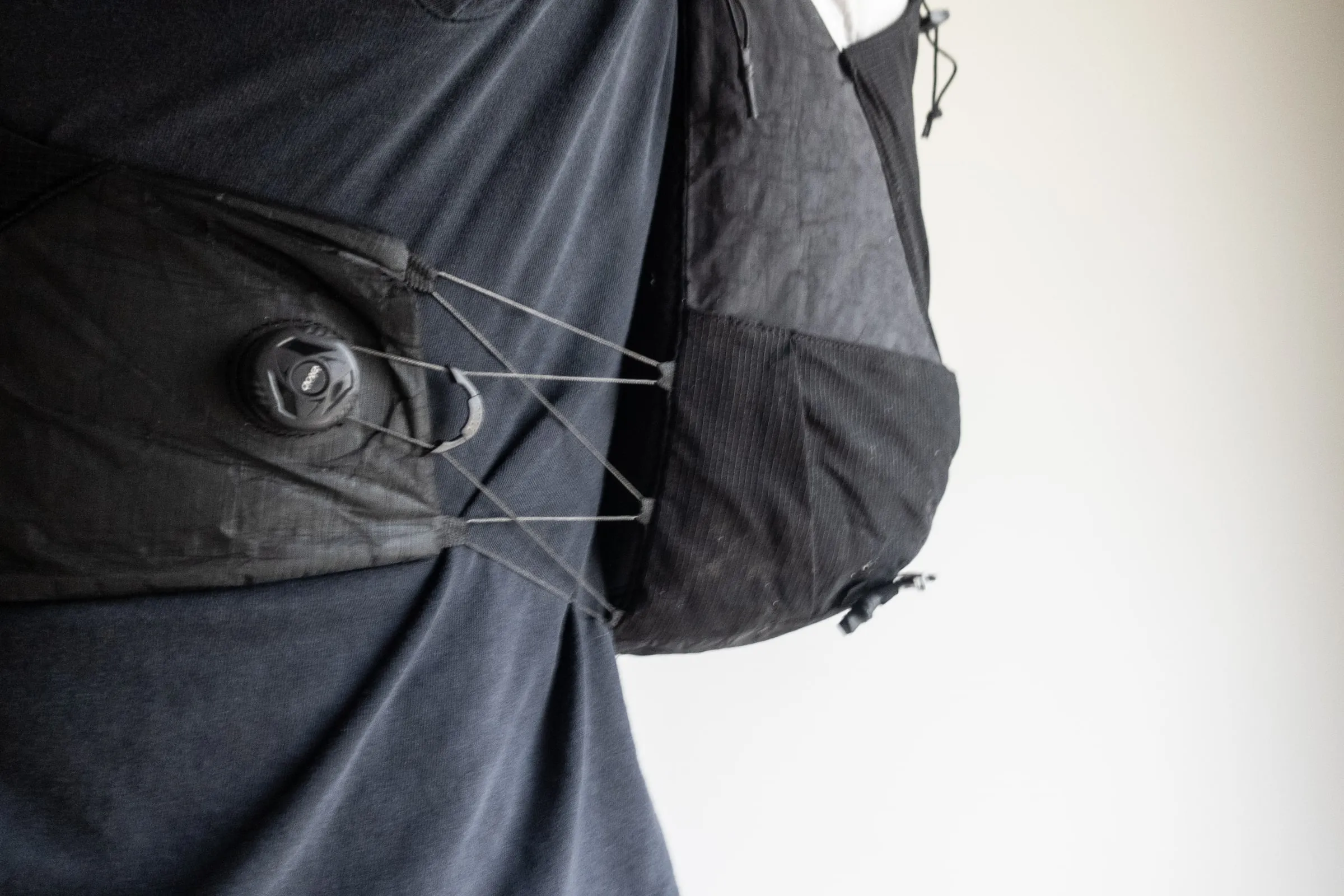
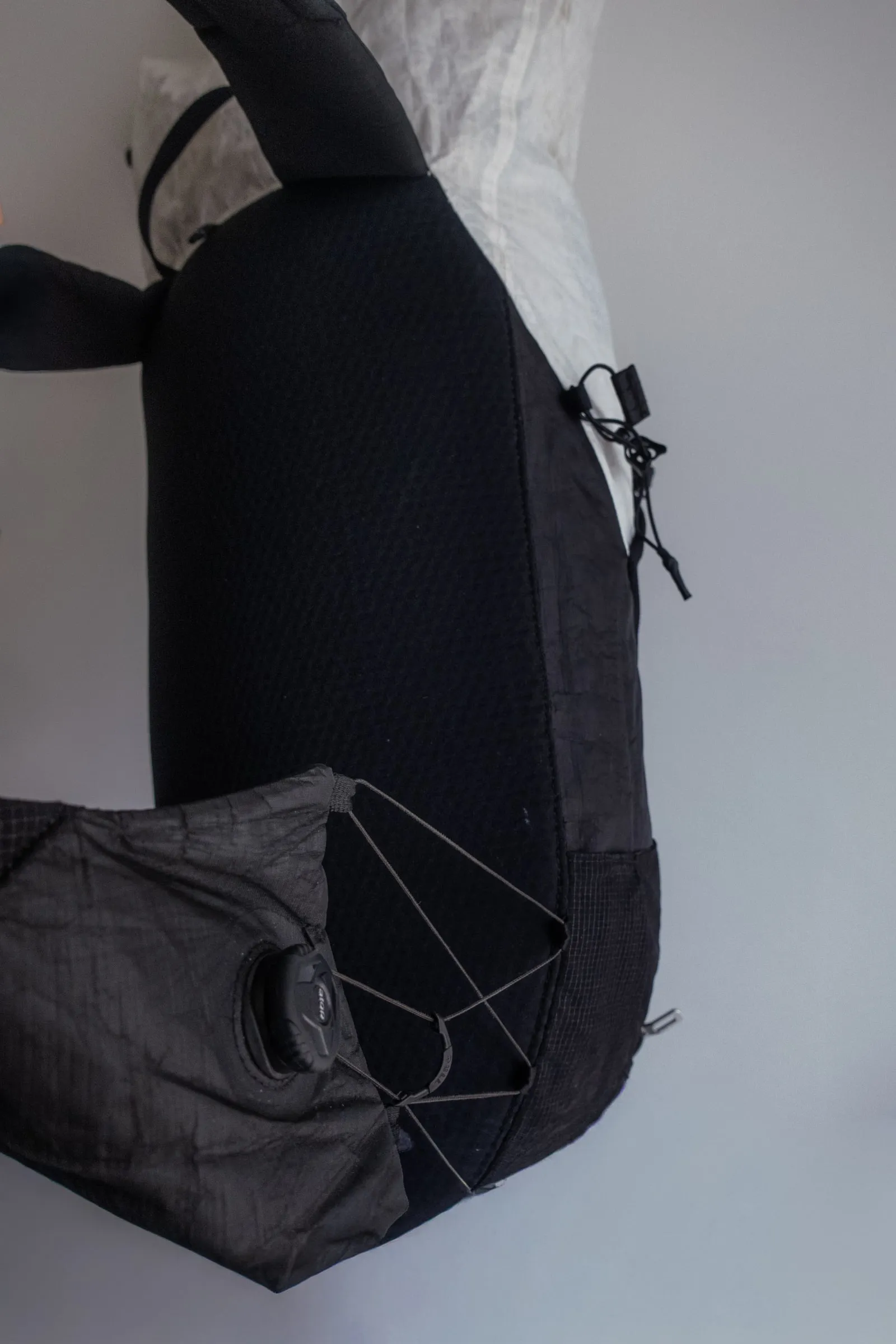
The useful gap between 14 and 30 litres
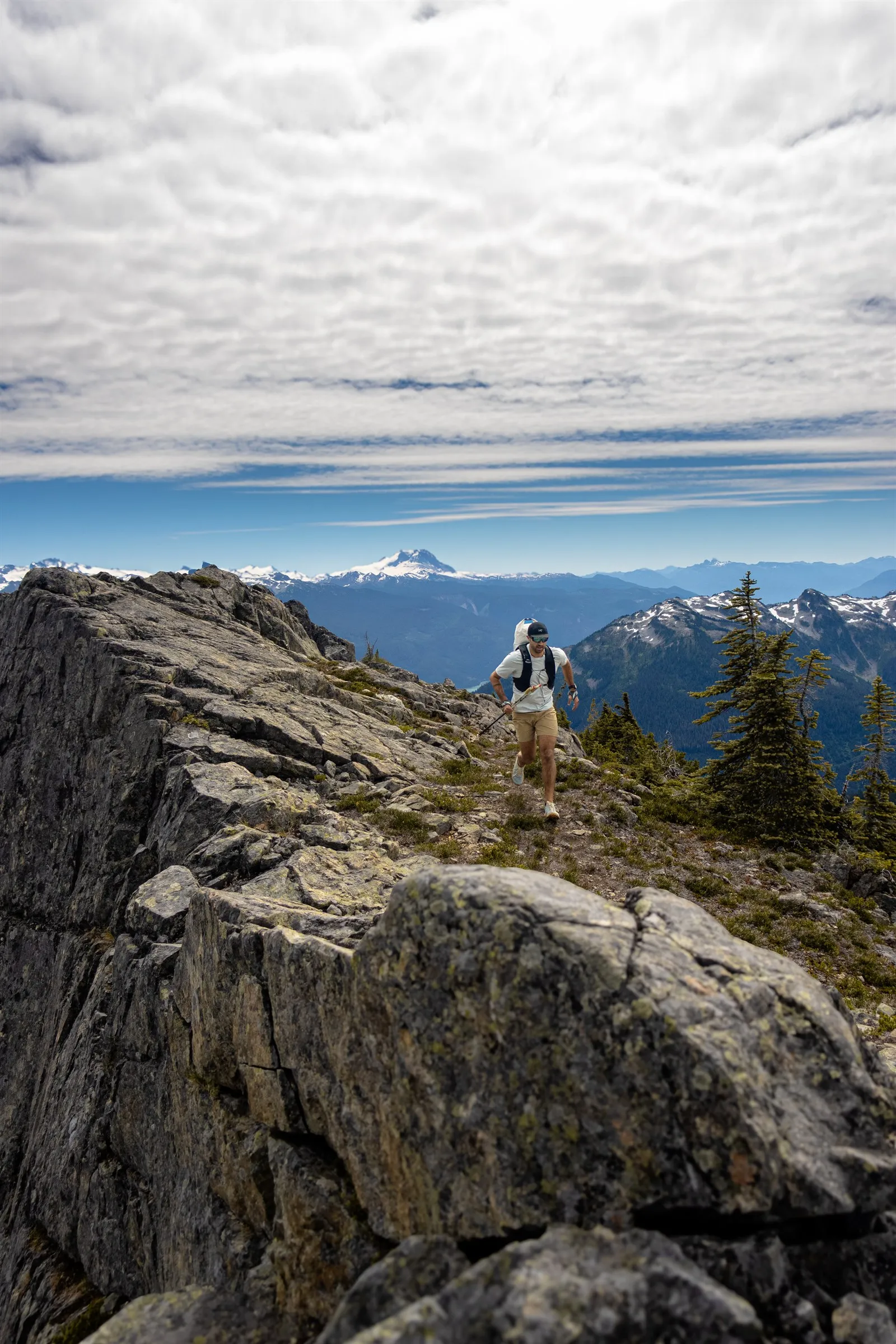
Several partners on Bastardo and the Tantalus Traverse carried Arc’teryx Norvan 14 vests. They worked, but packing them required more negotiation. Fourteen litres disappears quickly once technical equipment, layers, and food enter the day.
The Ultra Pace’s 20-litre main body and three-litre rear stretch pocket create more than a numerical difference. I could put my climbing gear and helmet inside instead of covering the outside of a running vest with equipment. The pack stayed orderly, and there was still somewhere to put a layer later.
The rear pocket became the quick-access space for anything I did not want buried in the roll-top: food, gels, an extra water filter, sunglasses, or a headlamp. It is a simple dump pocket, but a useful one. In winter, I plan to use it for skins so the wet equipment can stay outside the main compartment. That remains a plan, not a tested winter conclusion.
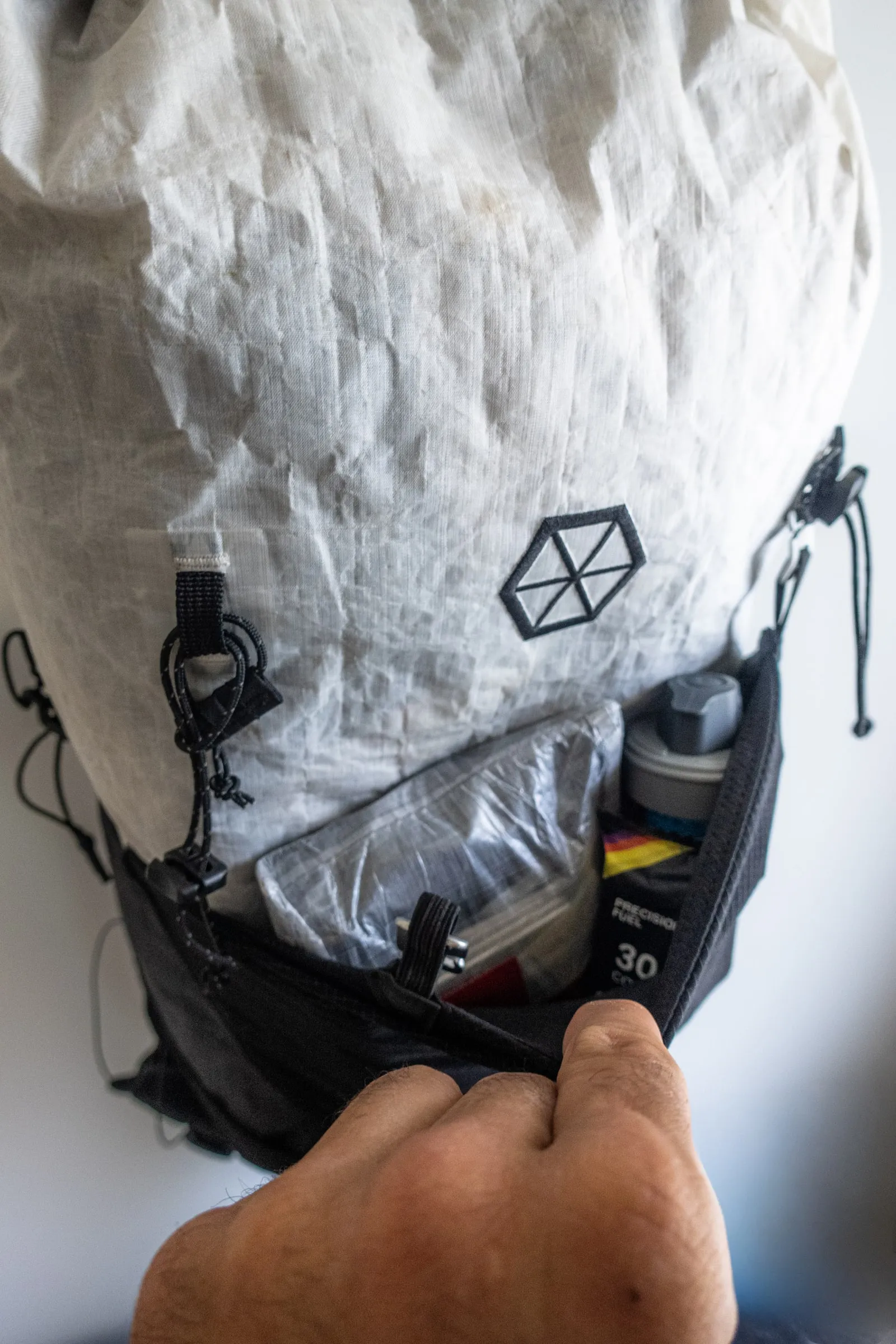
The Distance 15 was my proof that a running-vest harness could work for climbing, including on the Beckey–Chouinard. A larger load can make it sag away from me, though. The Ultra Pace wraps that load closer and adds proper carries for an axe and poles.
Front storage is a shared budget
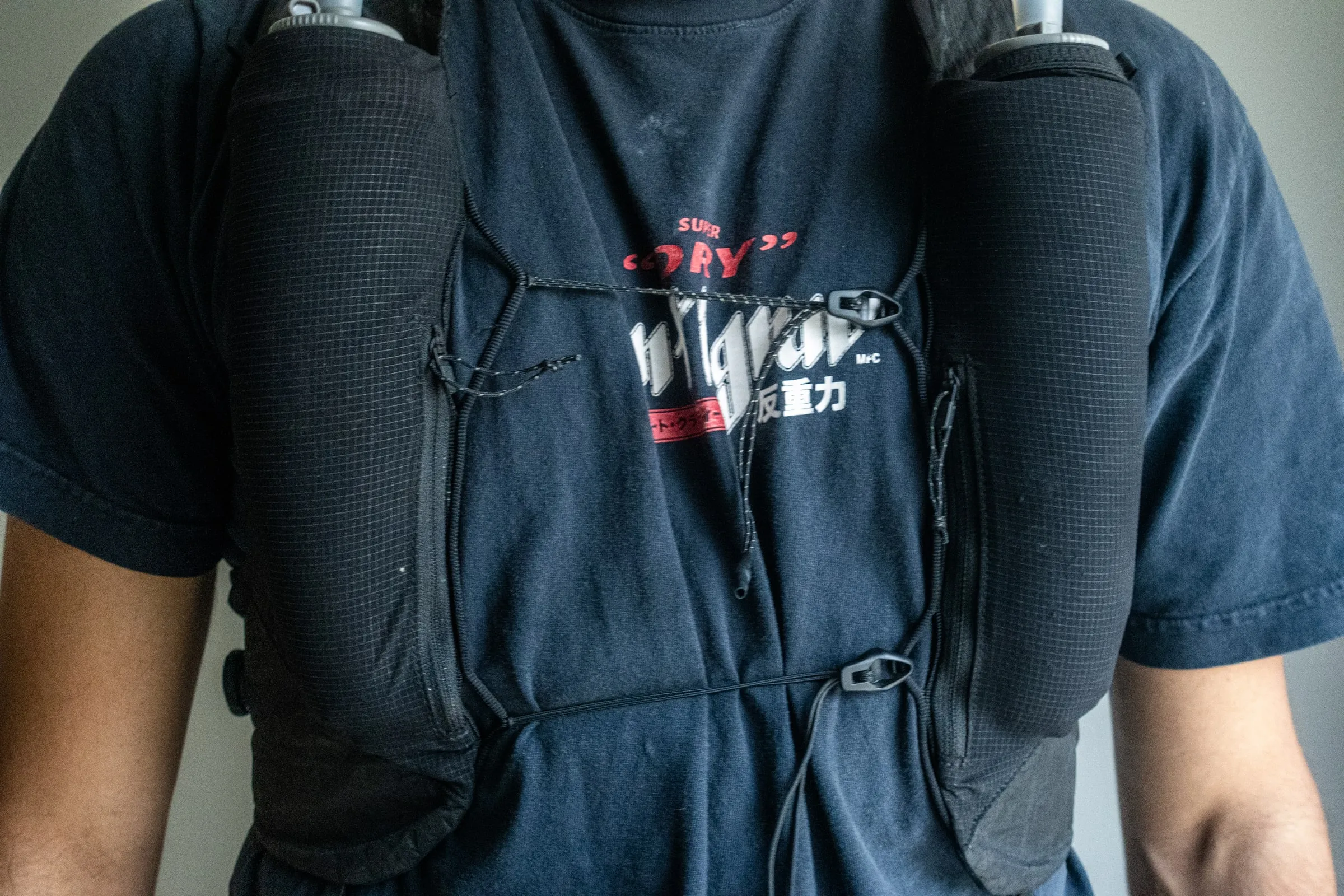
The Ultra Pace is not a replacement for a dedicated running vest. Each shoulder strap has a soft-flask sleeve and zippered access into the same general storage volume, without the collection of open stash pockets I expect for an ultramarathon.
Two 600-millilitre flasks fit without bouncing or becoming oppressive. They simply consume more of the space I also want for a phone, small camera, gels, and food. Two 500-millilitre flasks leave a better balance: one litre immediately available, with room around them for smaller items.
For climbing, I often need less water on my chest than I do while running. My preferred arrangement became one flask side and one storage side. The compromise is real, but it suits the activity.
The zippers themselves are easy to use. I repeatedly pulled out food while moving or running, and while belaying on Bastardo I opened a front zipper and retrieved my camera one-handed. The pockets give up some total organization compared with a running vest, but access is not the problem.
Alpine carries without much hardware
The attachment system walks a narrow line: light, removable, and simple without feeling improvised.
On the Tantalus Traverse, the RAD Line went at the bottom of the main compartment because it was heavy, compact, and unlikely to come out until a rappel or rescue required it. Climbing equipment went above it, with my helmet inside at the top. The helmet made the pack stand a little taller but never interfered with movement.
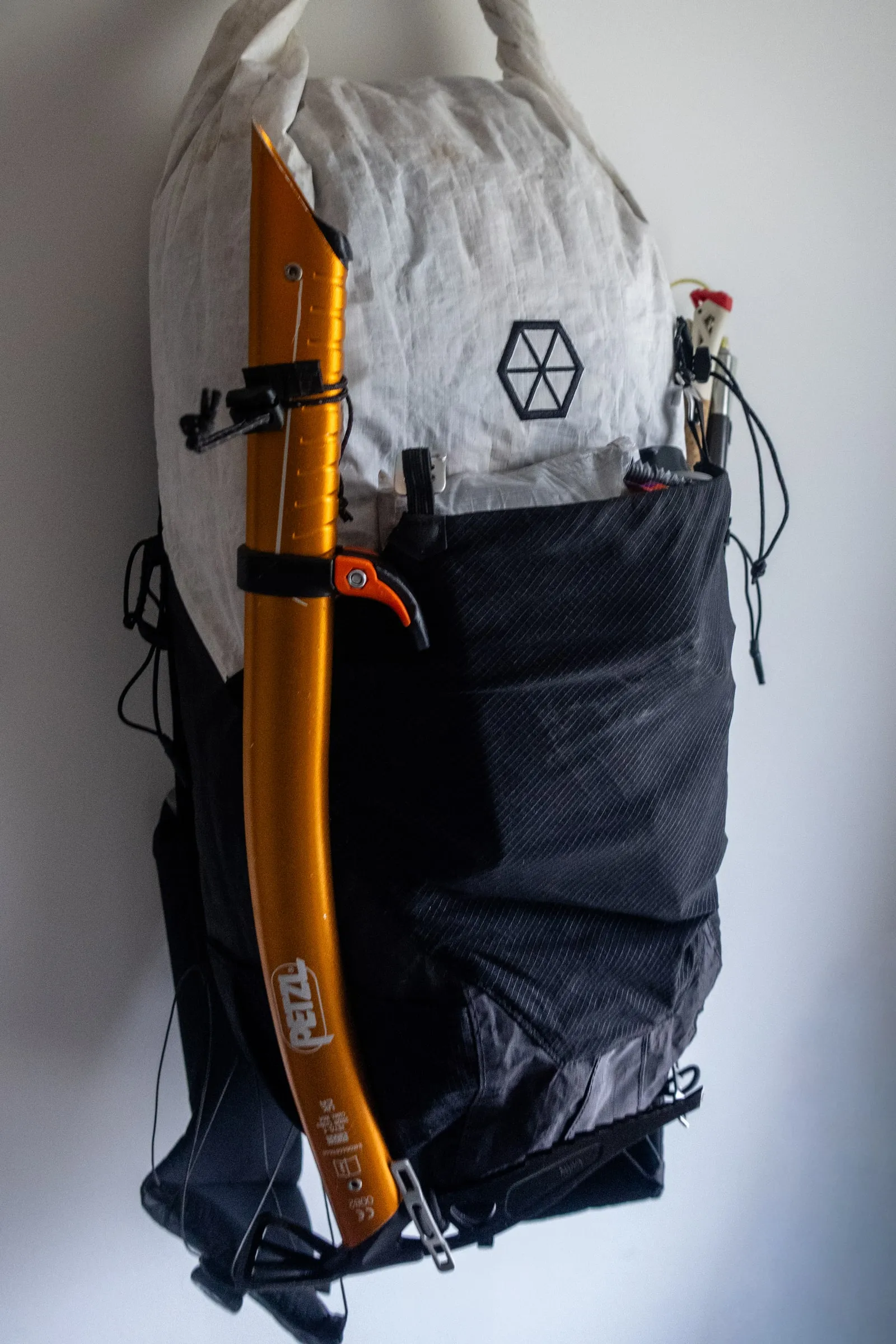
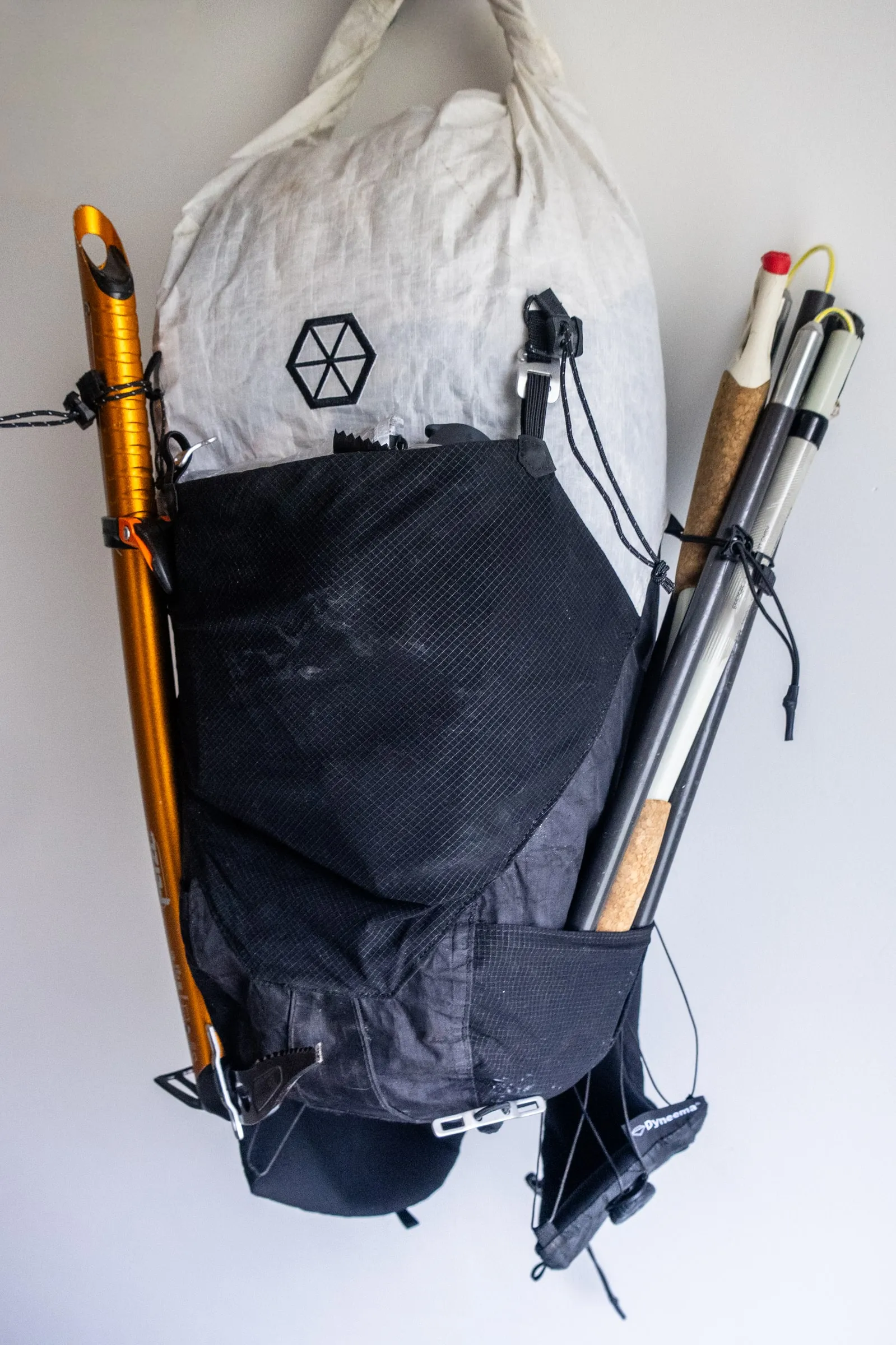
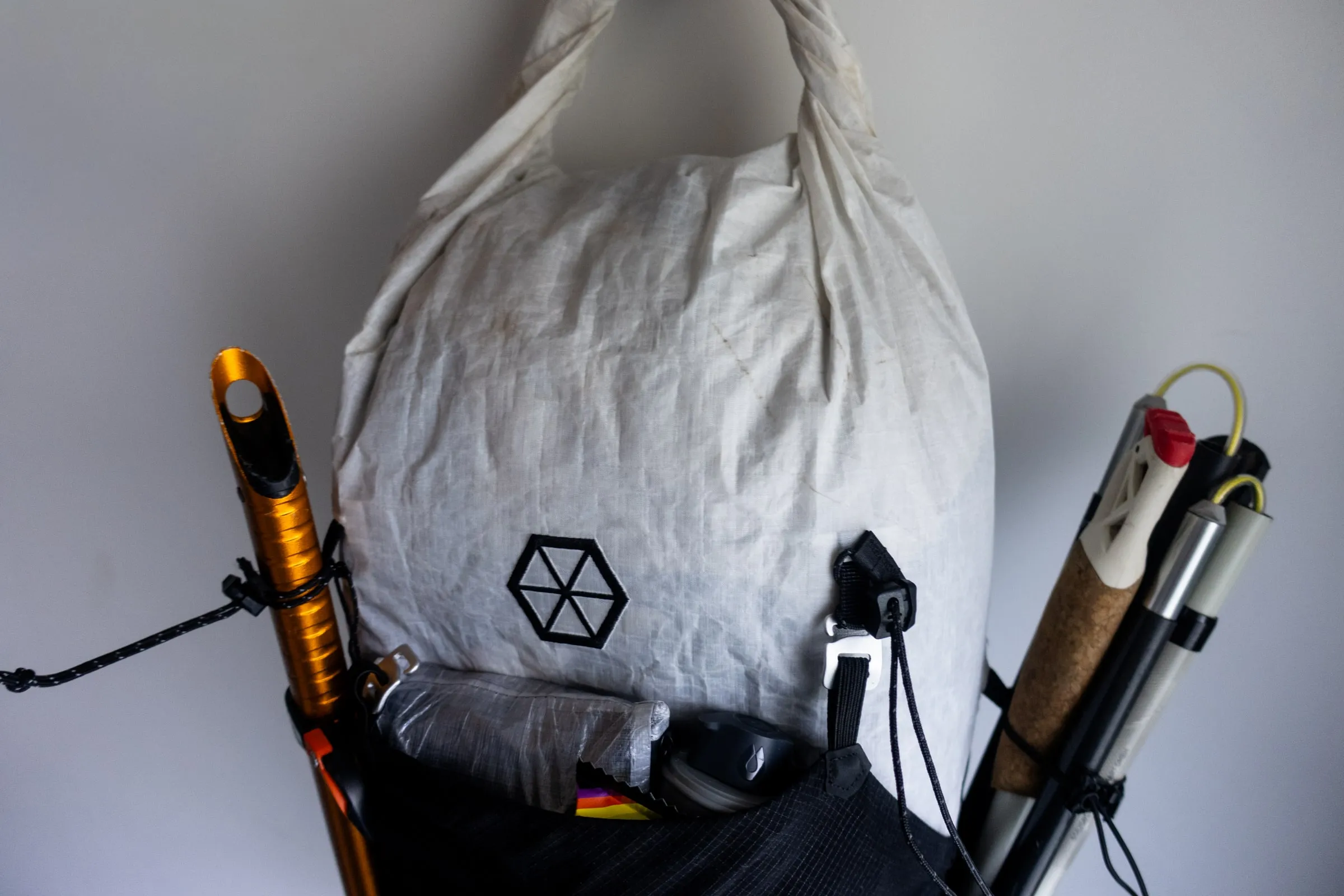
The Gully fit the dedicated ice-axe attachment, with the head secured low and the shaft cinched against the upper pack. Poles went into the side carry and stayed there. Neither bounced nor flapped while I climbed.
On the Tantalus ridge, I also carried the folded poles on a Raide 2L Running Belt. The belt sat below the Ultra Pace without overlapping the vest, and the poles remained out of the way while I moved.
The roll-top is the feature I appreciate more than I enjoy. I have used similar closures on several packs and still prefer the speed of the drawcord openings on the Arc’teryx Alpha FL 30 and SL 30. The Ultra Pace’s opening is not narrow, and the closure has caused no problems. It is simply slower to open and close.
The reason is obvious. A roll-top creates a more complete barrier against rain and snow than an open cinch closure. On a pack built around low weight and weather protection, I understand the decision even if I would rather pull one cord and keep moving.
What fourteen days can say about durability
Fourteen days is enough to find an early weakness. It is not a long-term durability test.
So far, there is little functional wear to report. The body and base have no meaningful abrasion. The stretch pockets, seams, attachment points, and ATOP cords show no fuzzing or deterioration.
The workmanship looks exceptional. I cannot find a blown or broken stitch, a seam peeling open, or any delamination. Fourteen days cannot establish long-term durability, but it is enough time for poor finishing to begin showing itself. None has.
The white Dyneema is getting dirty. Brown marks and discolouration appear quickly, as they have on every white Dyneema pack I have owned. The change is cosmetic, but I am tired of the look. A dark laminate hides normal mountain grime and looks new for longer.
The Ultra Pace has met rain, wet rock, snow, and the usual amount of sweat. Its contents have remained dry. I did not log the duration or intensity of each exposure, so this is an observation from real use, not a controlled waterproofing test or proof the pack will never leak.
My original concern was the thin cord in the ATOP system. One sharp edge in a chimney could still sever it. That is a one-off risk I accept in an ultralight design, not wear I have observed. The sternum straps would keep the pack on my body if a cord failed, and tying the line may offer a field repair. I have not tested that solution. It remains a contingency, not a durability result.
Who should buy it
Many fast alpine objectives around the Coast Range do not require a full climbing rope and heavyweight rack. I am often carrying a RAD Line, a light rack or no protection at all, compact glacier equipment, food, and enough clothing for a long day. That is the Ultra Pace’s territory.
A Tantalus Traverse in a day, a quick alpine rock route, or a longer light traverse all fit. The pack gives me room to move quickly without reducing the equipment list until it becomes fiction.
Something like The Fold on Mount Kidd presents the other side. A full-size rope, trad rack, food, and extra layers for a long Rockies route would require more packing compromises than I want to make. I would rather have the follower carry the shared load in a larger climbing pack while the leader wears the Ultra Pace.
The boundary applies in the other direction too. For an ultramarathon, I would choose a running vest with more front stash storage. The Ultra Pace gives up some running organization to become a more capable alpine pack.
The largest objection is the price. At $360 USD at the time of writing, without soft flasks included, this is an expensive and deliberately bare-bones tool. The materials, fit system, waterproof construction, and modular carries explain where the money went. They do not make the price disappear.
I am looking forward to testing the winter half: light tours around Whistler Blackcomb, fitness intervals on the Sea to Sky Gondola, spring touring, and eventually a Spearhead Traverse in a day. Ski carry, glove use, and repeated wet-snow exposure still need their own evidence.
For summer, the choice is simpler. When the kit is a RAD Line, light rack, glacier gear, and layers, this is the pack I want. When the kit starts with a full rope and trad rack, I stop pretending 20 litres is enough.